On this page
Start here
A series number is not a complete comparison
Compare the exact Philips models available in your market rather than deciding that 7000 must be better than 5000 for every household. The series names help organize the range, but the full reference identifies the appliance whose features, dimensions, and support you need to verify.
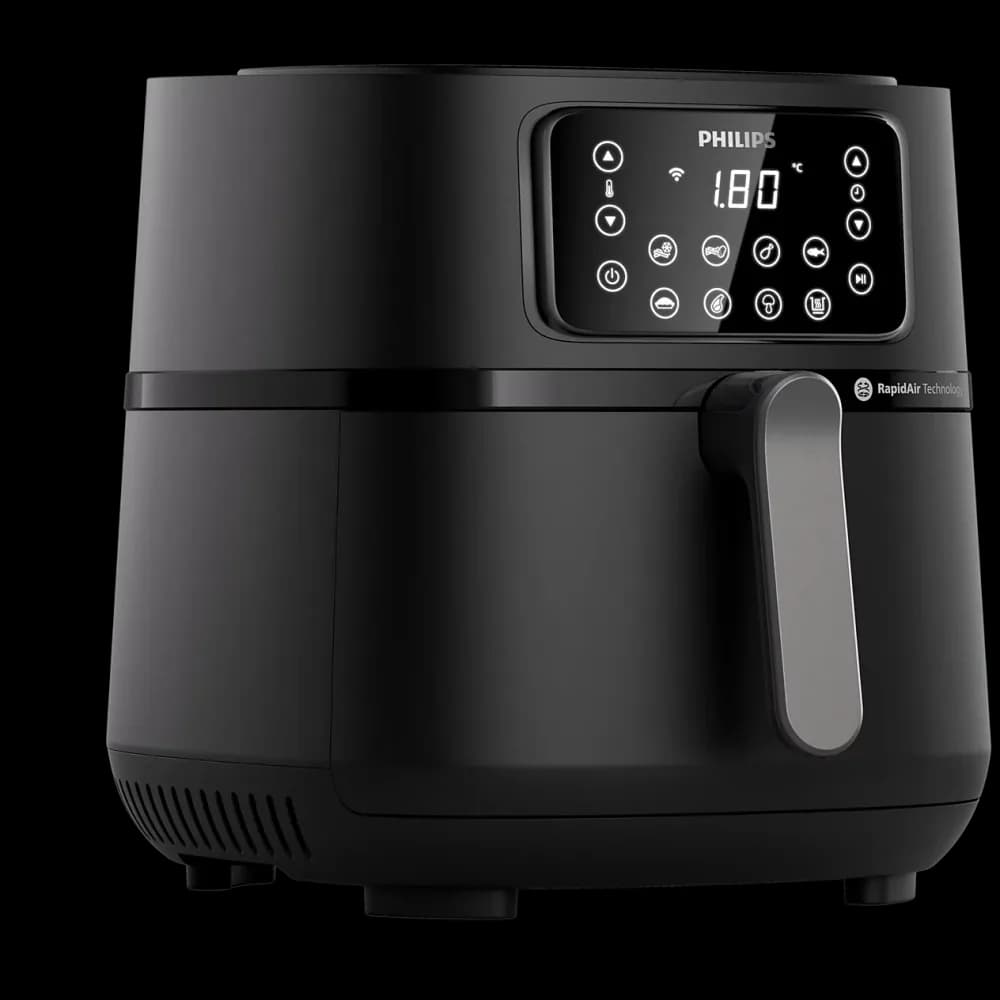
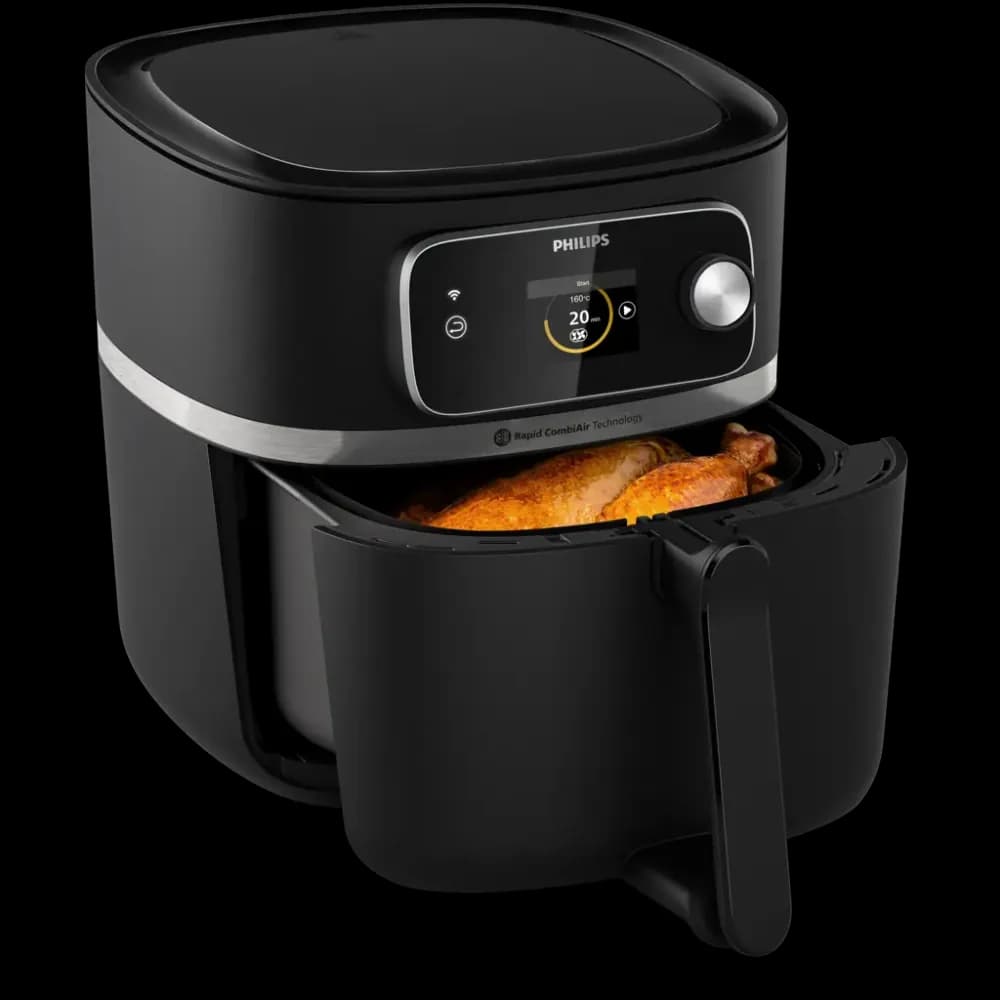
Two documented examples are HD9285/90, described by Philips as a 5000 Series XXL Connected model, and HD9880/90, whose official leaflet describes a 7000 Series Airfryer Combi XXL Connected. Those examples give a concrete starting point. They do not represent every product that has used either series name.
Identify the feature you would pay more for
The HD9880/90 leaflet identifies a food thermometer and automatic cooking programs. The HD9285/90 page describes connected support and its own cooking functions. Compare the features documented for those exact references rather than relying on a general premium label.
If a thermometer is the main attraction, check its operating guidance and whether the foods you cook suit it. If connectivity is the main attraction, check supported app functions and home-network requirements. A feature earns its price difference when you can name a recurring task it improves.
Start with fit on both sides
Confirm the body dimensions, instructed operating clearance, basket layout, and compatible cookware for each shortlisted reference. Do not assume two XXL models have the same usable basket shape. A control or thermometer upgrade cannot compensate for a dish that does not fit.
Map one normal meal and one larger routine meal against the documented layout. Mark internal dimensions unknown if you cannot verify them. Manufacturer serving suggestions can be context, but they should not replace the actual portion arrangement you need.
Compare control complexity with convenience
Read the steps for choosing a program, adjusting settings, and interpreting the display. An advanced program may be useful when its routine matches your food. It may add little when you normally set a straightforward time and temperature according to your instructions.
If several people use the appliance, check whether they can all understand those steps. More automation is not the same as less learning. The right model should make normal cooking clear for the household rather than require a specialist to operate it.
Watch regional references and bundles
Keep the suffix and market with every specification you collect. A review may discuss a regional variant or a different generation. Do not transfer its included accessories, coverage terms, or dimensions without matching the reference.
When an offer changes colour or adds a bundle, recheck the supplied parts and model number. Compare the complete payable offer, not an isolated promotional amount. Useful accessories can matter, but a large bundle of unused extras does not automatically make the higher series better value.
A feature-cost example
Suppose both exact-model shortlists pass your food-fit and operating-space checks. One supplies a thermometer feature you would use for several compatible meals, while the other already provides the straightforward controls you normally need. Compare the current complete price difference with that identified feature use. If your routine does not benefit from the extra function, the higher series number adds little to your decision. If it does, read the operating restrictions before paying. This makes the comparison specific without declaring every 7000 model superior to every 5000 model.
A sensible 5000-versus-7000 decision
Choose the specific model that fits your kitchen and improves your recurring routine at a price you accept. Consider a thermometer-equipped reference when that documented feature is useful, and a simpler connected reference when it already handles your needs. This is a feature-and-fit buying comparison, not an independent verdict that one series cooks better.
- Match complete Philips references, including suffixes.
- Verify thermometer and app features on the exact model.
- Compare usable basket fit and operating dimensions.
- Read normal controls and program adjustment steps.
- Keep review claims attached to their tested regional product.
- Price useful features and accessories instead of the series number alone.
Behind this guide
Sources & editorial method
This guide combines original editorial decision support with the linked documentation. It is not a hands-on product test. Check the exact regional model and its manual before purchasing or using an appliance.
- Philips HD9285/90 5000 Series XXL Connected product leaflet ↗Checked
- Philips HD9880/90 official 7000 Series leaflet ↗Checked