On this page
Start here
A probe is useful when you will actually use it correctly
Consider an integrated temperature probe if you regularly cook foods compatible with the model's probe instructions and want that measurement incorporated into its controls. Skip the premium if your usual meals rarely use it or if the allowed food sizes do not match your portions. A probe is a specific tool, not a universal guarantee of successful cooking.
Check the exact regional model and the included accessories. Similar-looking air fryers may differ in whether a probe is supplied, supported, or integrated with a program. A picture of a thermometer on a retailer page is not enough to establish compatibility.
Read the limitations before the feature list
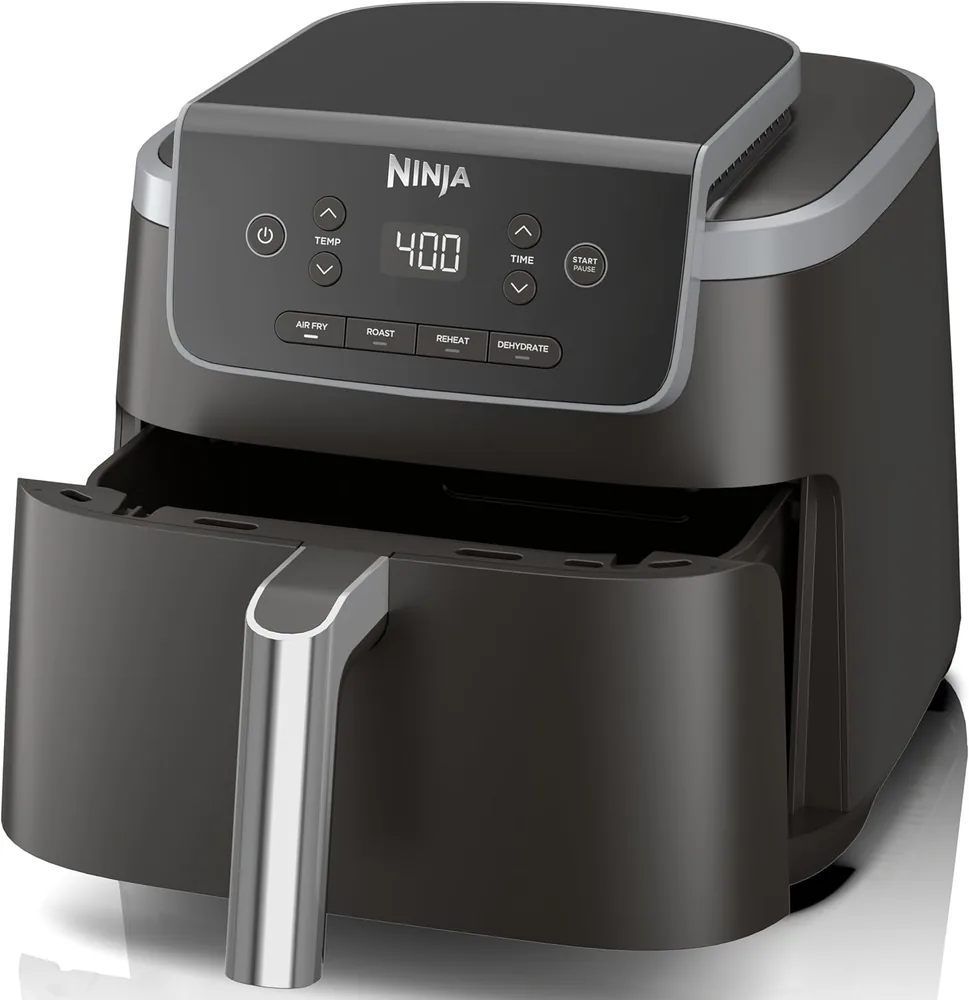
Ninja's AF451UK product page identifies an integrated cooking probe with its Smart Cook System. Before paying for that feature, obtain the exact model's current instructions and check supported foods, placement, and operating limits. The presence of a probe alone does not establish that it suits your regular meals.
For another appliance, read its own limits rather than assuming the AF451UK rules transfer. Check compatible food types, placement, and how probe control interacts with cooking modes. Keep the manufacturer instructions available, because the practical value depends on following them.
Placement matters more than a smart label
A probe measures at its sensing location. Correct placement therefore belongs in your buying decision, not only in a first-use lesson. Inspect the diagrams in the manual and ask whether the placement is practical for the food shapes you cook. Do not assume pressing a preset corrects a badly positioned probe.
Use official food-safety guidance for your region and the food involved, together with the appliance instructions. A manufacturer's convenience claim and a safe-cooking requirement serve different purposes.
Compare integrated and separate tools fairly
An integrated system may display or respond to a probe reading within the appliance. A separate food thermometer is a different tool with its own use and suitability requirements. Do not put an ordinary thermometer into an operating air fryer unless its instructions and the appliance guidance permit that use.
Price the feature against your actual workflow. If you already use an appropriate thermometer and rarely need automatic probe-controlled cooking, you may not need the integrated system. If the integrated controls solve a regular problem, compare replacement availability and compatible accessories before deciding.
Do not forget cleaning and storage
Read how the probe, cable, socket area, and any storage compartment must be maintained. Follow the exact manual rather than assuming the probe can be cleaned like the basket. Look for a compatible replacement part and clear support documentation.
Also check how the controls show the selected zone when a probe is used with a multi-zone appliance. A feature that adds a confusing setup sequence may not suit every household. A brief manual walkthrough can reveal that tradeoff before you buy.
A feature-premium calculation
Suppose two suitable models differ mainly in integrated probe support. Record the price difference from current comparable offers, then count how many regular meals actually meet the probe guidance of the exact model. If most of your usual foods fall outside that use case, the premium may be better spent on verified fit or easier controls. If you repeatedly cook suitable foods and value the integrated sequence, the feature can have a clearer purpose. Make the decision using the tasks you can confirm for the exact model and the checks needed for the actual food.
A practical buying threshold
Pay extra when you can name a recurring compatible food, follow the placement instructions, and identify what the integrated controls improve. Do not pay extra solely because a probe sounds like a more professional appliance. Choose using the supported food, placement, controls, and replacement route rather than assuming every integrated probe provides the same routine.
- Confirm the probe is included with the exact reference.
- Read food-size and frozen-food restrictions.
- Review the manufacturer placement diagrams.
- Check supported cooking modes and zones.
- Verify cleaning guidance and replacement compatibility.
- Use regional official guidance for food-safety targets.
Behind this guide
Sources & editorial method
This guide combines original editorial decision support with the linked documentation. It is not a hands-on product test. Check the exact regional model and its manual before purchasing or using an appliance.
How we research and publish our guides