On this page
Start here
Conversion helps compare labels, not meals
Convert the capacity units when comparing air fryers across markets, but do not treat converted volume as proof that the same food arrangement fits. Basket shape, the usable plate, internal height, and the manufacturer's loading guidance still matter. Litres and quarts describe volume, not a complete meal layout.
Start by identifying which quart is meant. US liquid quarts are commonly used in US appliance listings, but quart is not a single worldwide definition. If a listing does not make its convention clear, check the manufacturer reference rather than silently using a conversion that may be inappropriate.
Use the stated unit convention
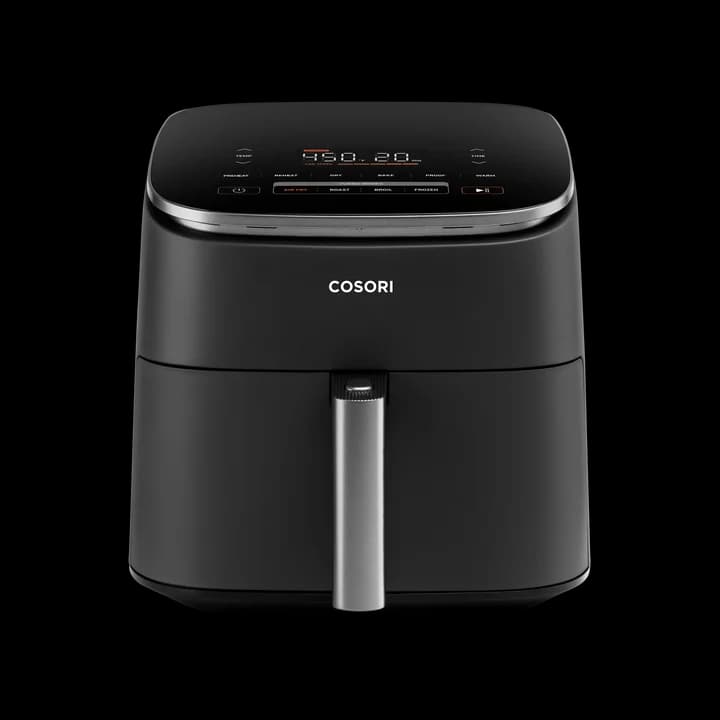
NIST's conversion table gives 1 US liquid quart as 0.9463529 litres. Using that convention, 6 US liquid quarts are about 5.68 litres, usually rounded to 5.7 litres. COSORI's US TurboBlaze page uses the paired label 6 qt / 5.7 L for its listed model.
NIST also lists other volume conventions, so do not assume every historical or regional quart label is identical. Keep the conversion convention in your comparison note. For practical shopping, a sensible rounded value is usually more useful than many decimal places.
Do not infer a regional twin from the arithmetic
A US product labeled 6 qt and a European product labeled 6 L are not automatically the same appliance with a different label. They may have different regional references, electrical specifications, accessories, controls, or measurement presentation. Confirm the exact manufacturer pages.
Similarly, a small numerical difference does not prove one basket holds a meaningfully larger meal. The cooking plate could differ in shape, or the usable height could be different. Use conversion to organize the shortlist, then verify the aspects that determine your actual food fit.
Compare total and individual zones
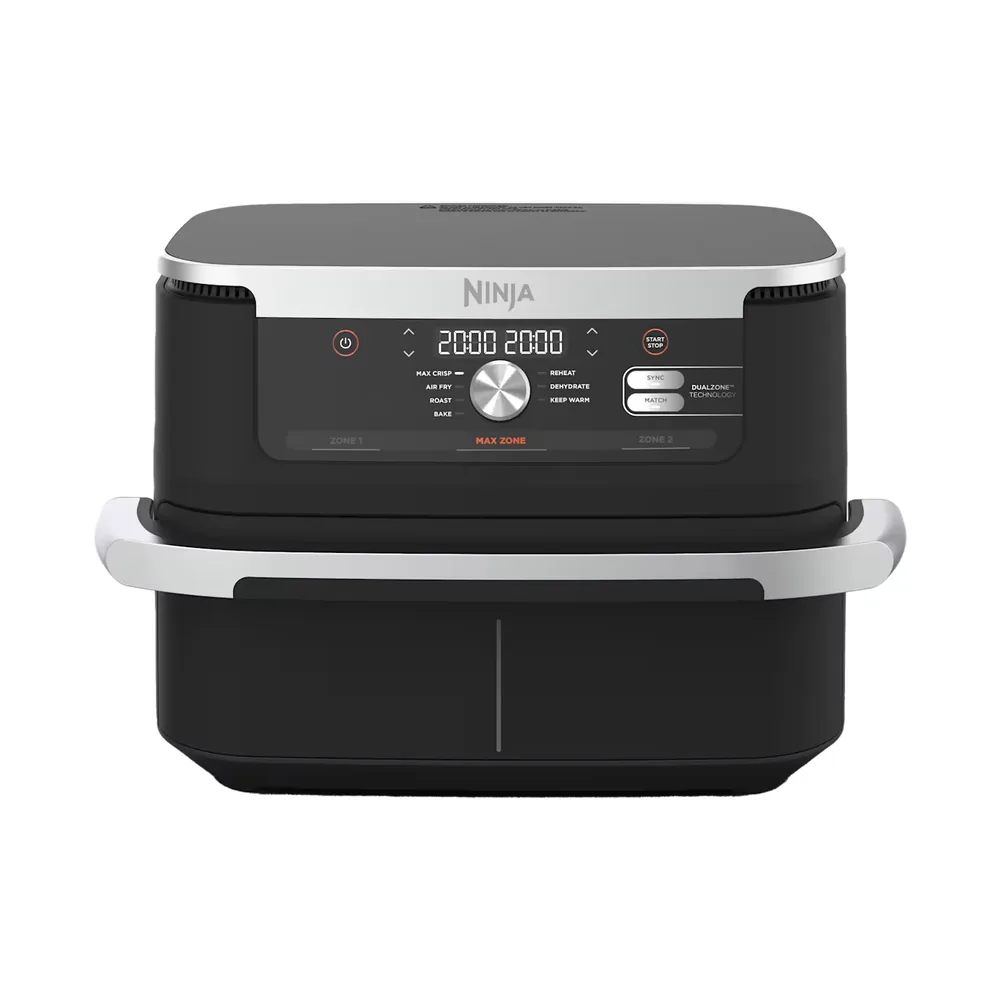
A dual-basket appliance may headline its combined volume. Record the individual zones separately when their dimensions or capacities are supplied. A dish that needs one uninterrupted space cannot automatically use the total of two independent baskets.
For a removable-divider model, check the approved undivided configuration and its usable space. Do not add two drawer capacities and assume a physical divider can be removed. The total label describes the product's stated arrangement, while the manual explains what layouts are actually supported.
Translate the numbers into a food-fit check
Write down the representative meal and how it must be arranged. Flat items need usable surface area. A compatible baking dish needs width, depth, and height including its rim or handles. A deep load must respect the exact model's instructions rather than an imagined litres-per-person formula.
If internal dimensions are missing, ask for them or use the manufacturer's compatible-accessory guidance where appropriate. Mark the fit unknown until you have evidence. A precise unit conversion cannot supply measurements that the source never gave.
A converted-volume comparison example
Suppose one hypothetical listing states 6 US liquid quarts and another states 6 litres. Converting the first gives about 5.68 litres, so the labels differ mathematically. That does not prove the second fits a wider dish or a larger complete dinner. You still need usable floor dimensions, height, and the intended arrangement. Keep both the arithmetic and the fit uncertainty in the comparison. A rounded conversion is helpful for sorting options, while claiming a meal-size advantage from that small numerical difference would go beyond the evidence.
A concise comparison note
Keep the original capacity label, the conversion convention, and a rounded metric equivalent in separate fields. Then add individual-zone and usable-dimension information. This makes cross-market comparisons clear without pretending that arithmetic replaces the more important check of what fits.
- Identify whether the label uses US liquid quarts.
- Keep the original stated capacity beside the conversion.
- Round sensibly rather than displaying false precision.
- Verify regional model identity separately from volume.
- Record each zone as well as the combined total.
- Confirm the intended food or dish fits the usable surface and height.
Behind this guide
Sources & editorial method
This guide combines original editorial decision support with the linked documentation. It is not a hands-on product test. Check the exact regional model and its manual before purchasing or using an appliance.
- NIST SI guide: volume conversion factors ↗Checked
- COSORI TurboBlaze CAF-DC601-KUS specifications ↗Checked