On this page
Start here
Choose a shared meal workflow first
Two people do not automatically need two baskets. A broad single basket can suit a shared meal cooked at one setting. Separate drawers become more useful when each person wants a different food, a different cooking schedule, or a main and side with independent settings. Start with that distinction rather than an assumed litres-per-person formula.
A household that eats together most nights may value a common cooking surface. A household with different work schedules may rarely use both zones simultaneously. Your appliance should match the dinner you actually make, not the ideal meal pictured on its box.
Sketch portions at their normal size
Use the portions you usually buy, including their shape. Two long fillets, two individual pies, and a pile of vegetables can all occupy different areas even when their weight looks similar. Check the usable base and the maximum-fill guidance for the exact model.
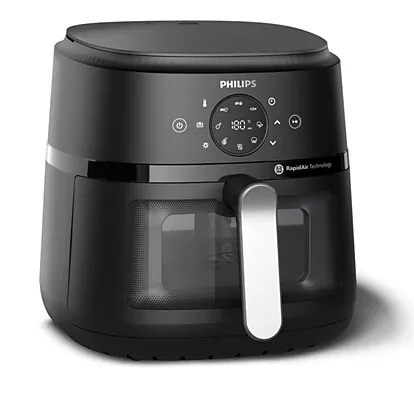
Philips publishes baking-dish guidance grouped by model reference, which is more useful for fit than a generic family-size label. If you plan to use your own dish, include its handles and rim in the measurement. The fact that two servings fit in a bowl on the table does not prove that bowl is suitable for the appliance.
Different settings are a separate requirement
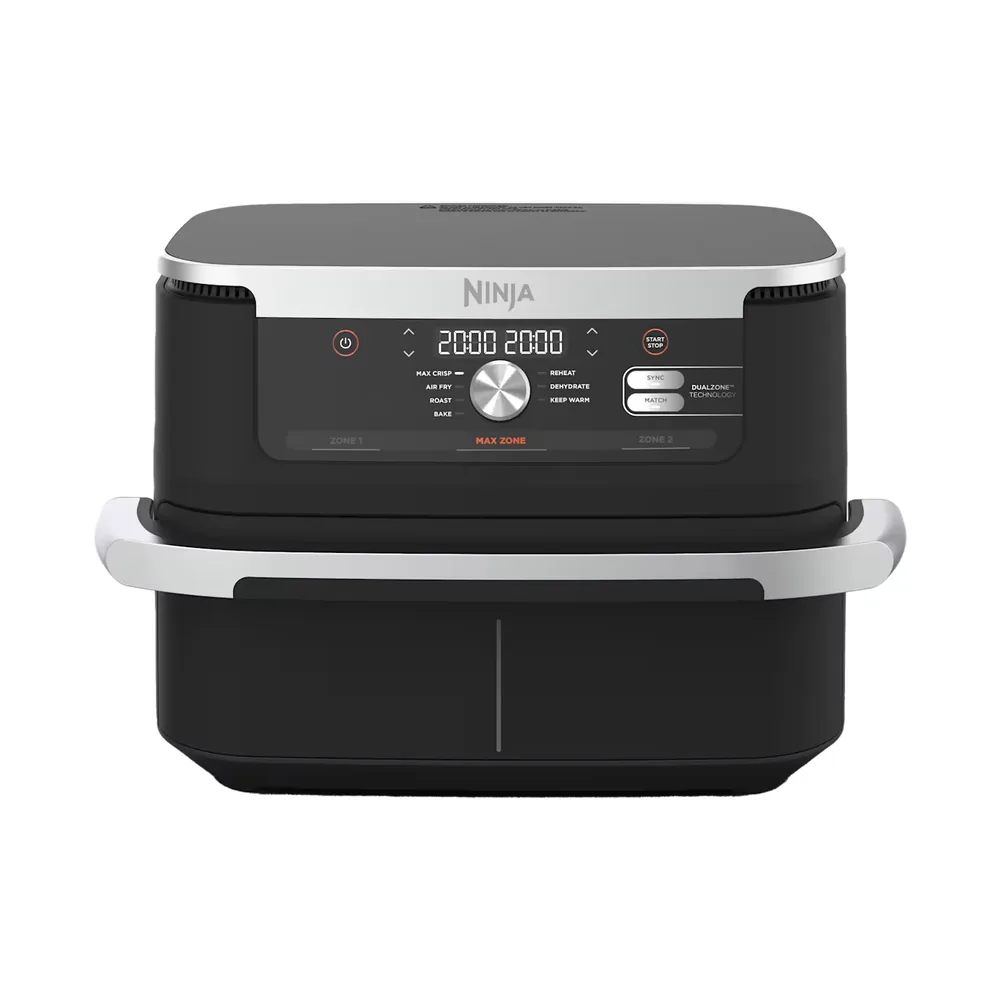
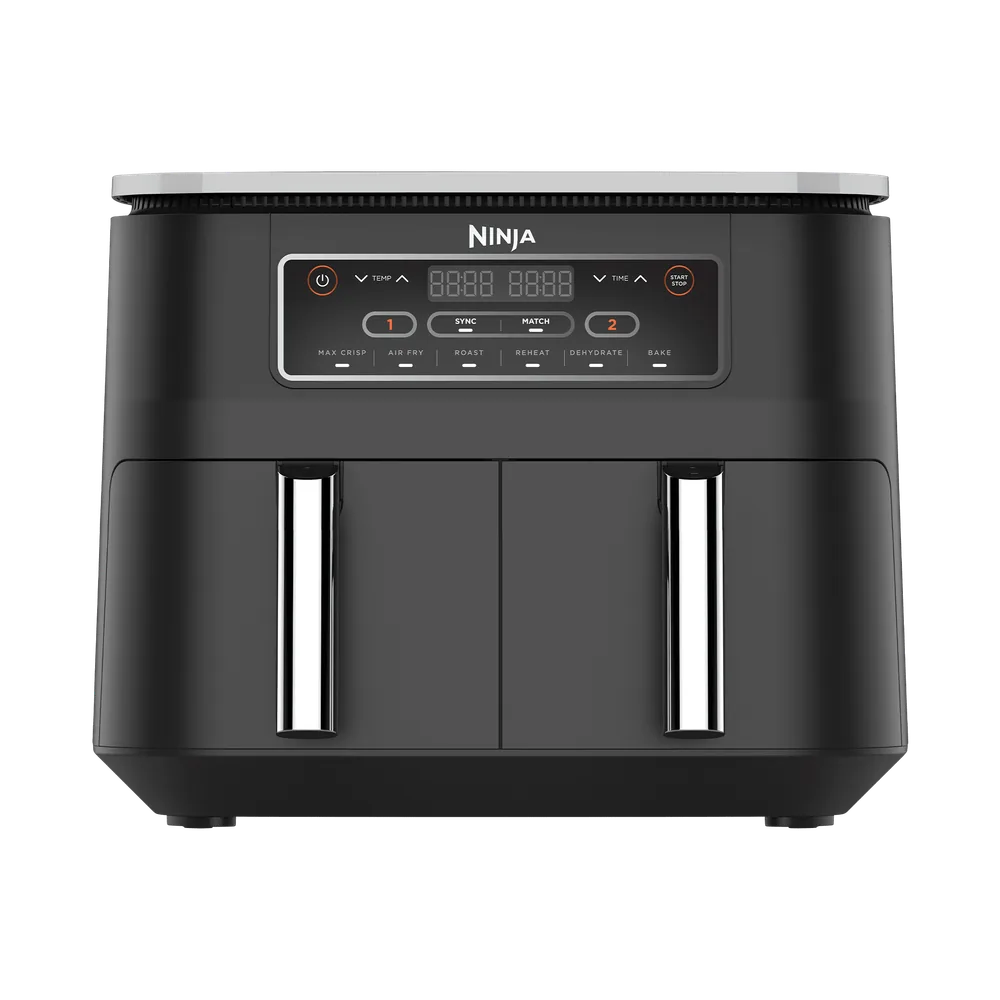
Imagine a shared dinner with one crisp component and one component you prepare on the stove. A single drawer may handle the air-fried part while the stove does the rest. Now imagine two foods that both need the air fryer but call for different settings. Separate zones may reduce juggling, provided each individual basket is large enough.
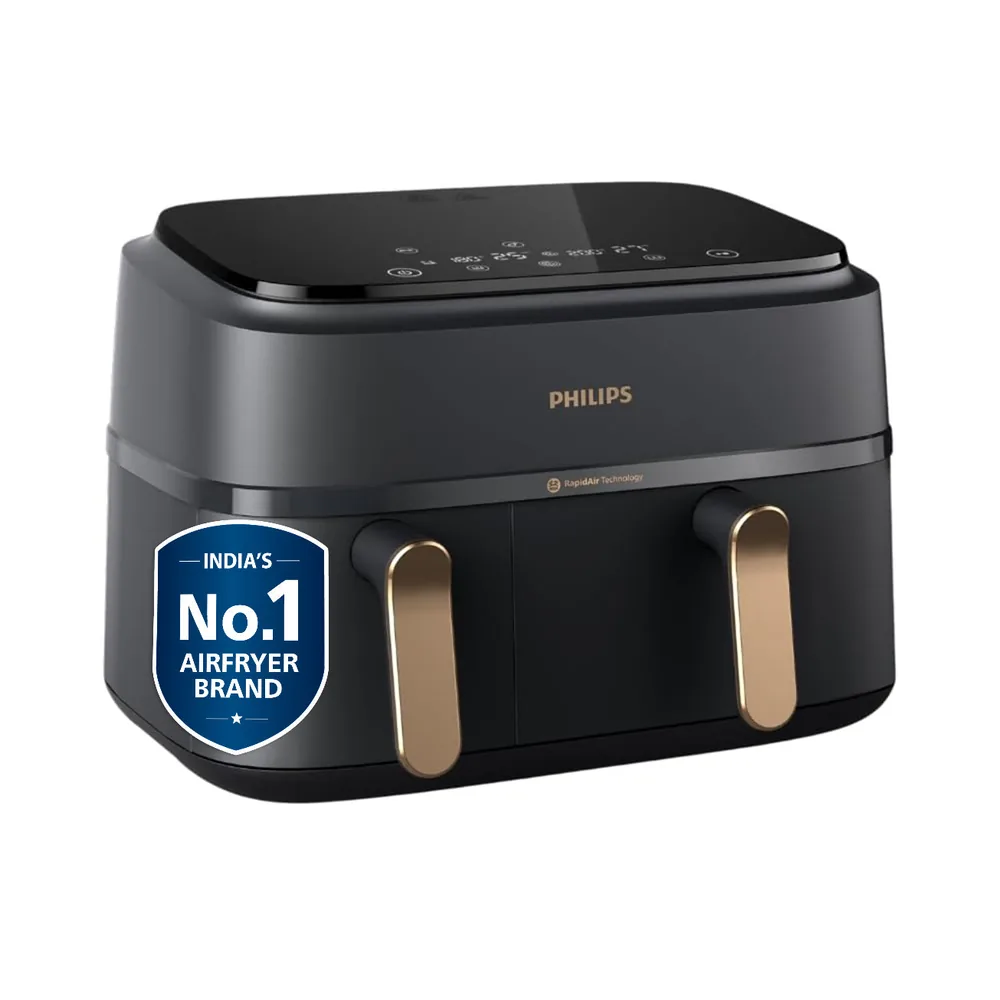
Philips describes its NA352/00 as a dual-basket appliance intended to coordinate two dishes. That feature is a reason to investigate the model, not evidence that every meal can be placed in it together. Follow the model's operating instructions for coordination and loading.
Remember staggered meals
If one person eats earlier, do not score the appliance only on simultaneous capacity. Look at the effort needed to run one portion, remove it, clean up, and run another later. A larger single basket can still be straightforward. Two drawers can offer organization, but they also create another removable part to store and wash.
Consider who will use the controls. If both people must learn a complicated sequence to select a zone and synchronize it, a simple interface may be more valuable than the synchronization feature itself. Try the control layout in a shop or read its manual before paying extra.
A fair comparison between shortlists
Create a comparison with four columns: your shared meal fit, your separate meal fit, the operating footprint, and the cleanup routine. Put unknown in any cell lacking verified information. Do not fill a blank with a generous assumption just because the product has a strong star rating.
If the single-drawer model passes all your usual meals, separate baskets are optional. If it repeatedly requires a second batch at dinner time, price the extra room against the inconvenience. An occasional larger meal can remain an oven job rather than determine every future purchase.
A couple with different schedules
Imagine one person usually eats after work while the other eats later. They cook similar portions but rarely cook simultaneously. Their first priority may be straightforward one-drawer operation and easy cleanup between meals. Now imagine a couple who eats together and repeatedly cooks two components requiring independent settings. Their priorities change toward two individually adequate zones. The household size is unchanged, but the useful layout is different. Compare your own week with these scenarios before letting a two-person shopping category choose the appliance for you.
Choose the compromise you can explain
Buy a wider single drawer when the main job is cooking the same food for two. Investigate separate drawers when independent settings solve a frequent problem. Neither design is the universal winner for couples, and our recommendations here are based on task fit rather than comparative cooking tests.
- Measure a typical two-portion arrangement.
- Check each individual drawer when considering a dual model.
- Identify meals requiring genuinely different settings.
- Count how often dinner is shared versus staggered.
- Verify the drawer fits your sink and drying area.
- Keep occasional hosting needs separate from everyday needs.
Behind this guide
Sources & editorial method
This guide combines original editorial decision support with the linked documentation. It is not a hands-on product test. Check the exact regional model and its manual before purchasing or using an appliance.
- Philips NA352/00 3000 Series Dual-Basket product details ↗Checked
- Philips: compatible baking tins and model groups ↗Checked