On this page
Start here
Treat infrared as a design feature to investigate
Choose an infrared air fryer only after checking that the complete appliance suits your food, kitchen, and operating routine. The heating label alone does not prove better cooking than every conventional air fryer. It is a reason to examine the exact model's design and evidence, not a shortcut to declaring a winner.
For a first shortlist, put an infrared model beside a conventional model that meets the same practical requirements. Compare verified usable space, controls, cleanup, local support, and current price. The feature earns its premium when those details support your intended use.
Know which model the claim describes
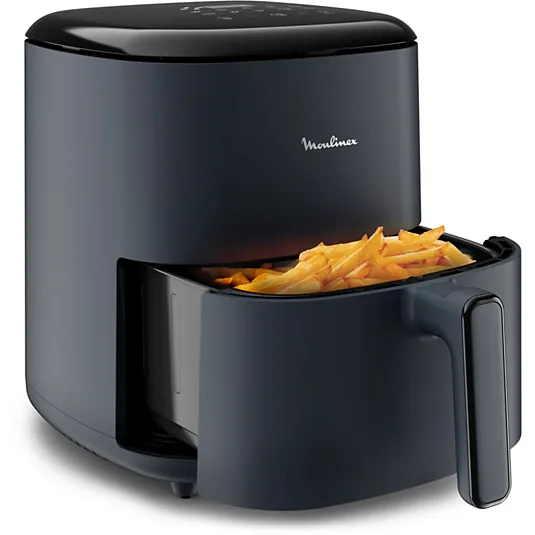
Moulinex describes its Easy Fry Infrared EZ832HF0 using infrared heating from above and convection from below. Its product page identifies a 7 L capacity and a viewing window. Those facts refer to that reference. Do not transfer them to every Easy Fry or every product described as infrared.
Keep stronger manufacturer claims attached to their stated test conditions. Compare the test conditions with the meal you intend to prepare before deciding what the claimed advantage means for your shortlist. Ask whether a claimed advantage was measured for a food and quantity similar to yours.
Look for evidence that matches the question
If your goal is fewer handling interruptions, look for the exact instructions about loading and food checks. If your goal is a larger meal, verify usable basket dimensions. If your goal is lower running cost, look for comparable measured energy for the same task. One broad marketing claim cannot answer all three.
A product demonstration may show a useful arrangement without proving it suits every ingredient. Identify the food, amount, mode, and any conditions mentioned. Leave an unknown cell in your comparison when you cannot verify the detail rather than assuming the new heating term supplies the answer.
Capacity and visibility still need checking
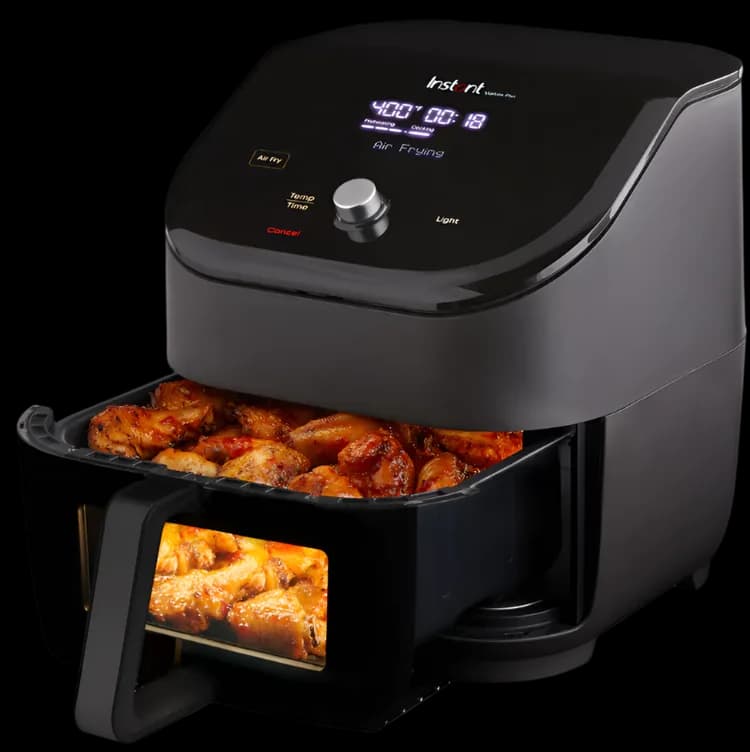
A viewing window can help observation if it provides a clear view from your counter position. It does not establish internal doneness, and it does not replace the model's operating checks. Confirm light control, viewing angle, and the cleaning guidance for the windowed drawer.
For capacity, compare the food footprint and any dish you intend to use. Advertised litres do not describe every usable dimension. A deep basket may be convenient for one task while a broad surface is more convenient for another, regardless of the heating system's name.
Price the whole ownership routine
Read the cleaning instructions and locate compatible replacement parts for the essential removable components. Check the support route and coverage terms in the market where you will buy. A current promotion is attractive only after the model has passed the same practical checks as your other shortlist options.
Do not infer a health benefit from infrared branding. Compare the documented cooking functions and the tasks you want to prepare. Choose using documented function and task fit, keeping unsupported claims out of the buying case.
A heating-label tie-breaker
Suppose an infrared model and a conventional model both fit your usual food, but only one fits the instructed operating space beside your preparation area. The fit requirement decides the shortlist before any heating claim matters. If both fit, compare useful documented features and evidence for your priority task. Do not award an automatic performance advantage to the newer term. You can still investigate it, but the decision should remain explainable through verified design facts and relevant evidence. An interesting heating approach does not remove ordinary purchase constraints.
When it belongs on the shortlist
Keep an infrared model on your shortlist when its verified layout and instructions solve a real cooking need at an acceptable total price. Prefer another model when it offers clearer fit, easier controls, or stronger evidence for your priority. The heating label should support a decision, not replace it.
- Save the exact infrared model reference.
- Separate documented design facts from promotional claims.
- Check the test conditions behind any performance percentage.
- Verify usable basket area and viewing-window practicality.
- Read model-specific loading and cleaning guidance.
- Compare local support, essential parts, and the current complete offer.
Behind this guide
Sources & editorial method
This guide combines original editorial decision support with the linked documentation. It is not a hands-on product test. Check the exact regional model and its manual before purchasing or using an appliance.
How we research and publish our guides