On this page
Start here
Give each basket a complete job
Write the meal as two separate tasks before linking their finish times. For each food, note the starting state, portion size, supported mode, placement and endpoint. A raw main and a frozen side do not become one recipe simply because they enter the same machine. If either food lacks a suitable method, resolve that first. Synchronising uncertain instructions only makes the uncertainty happen at the same time.
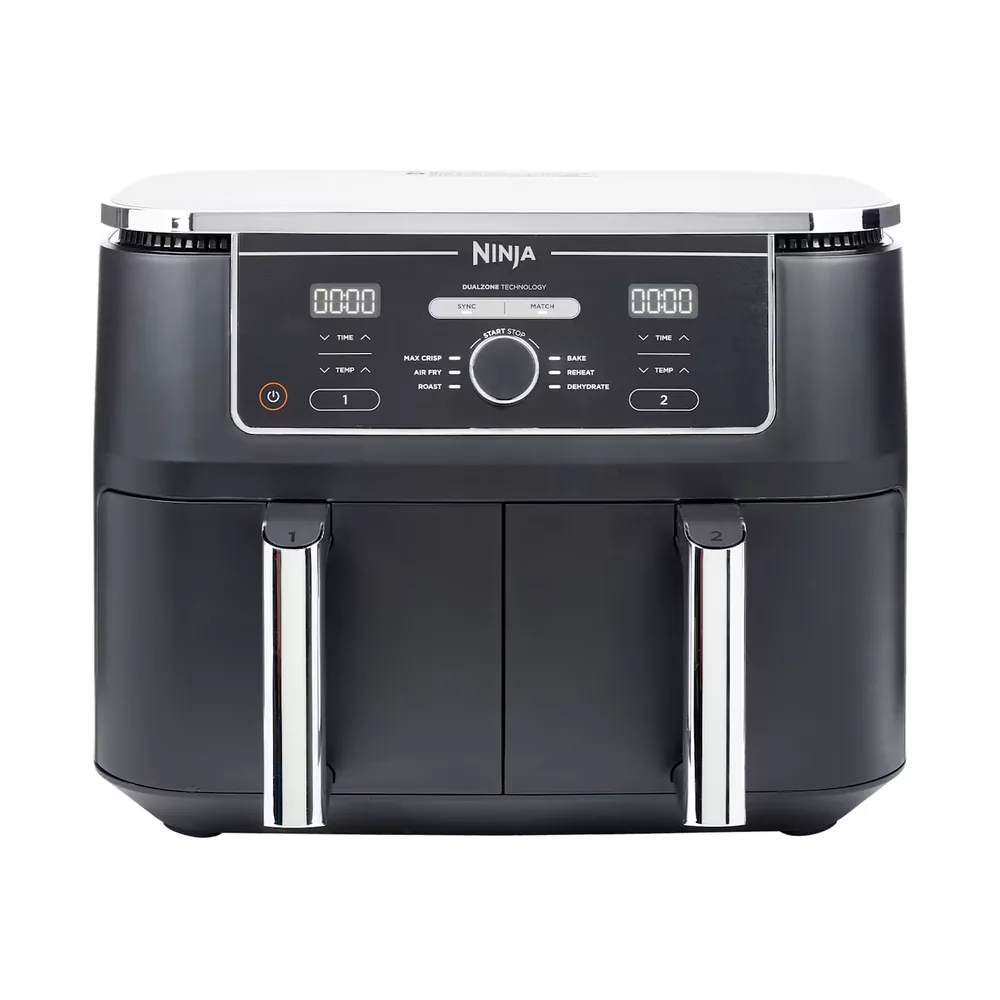
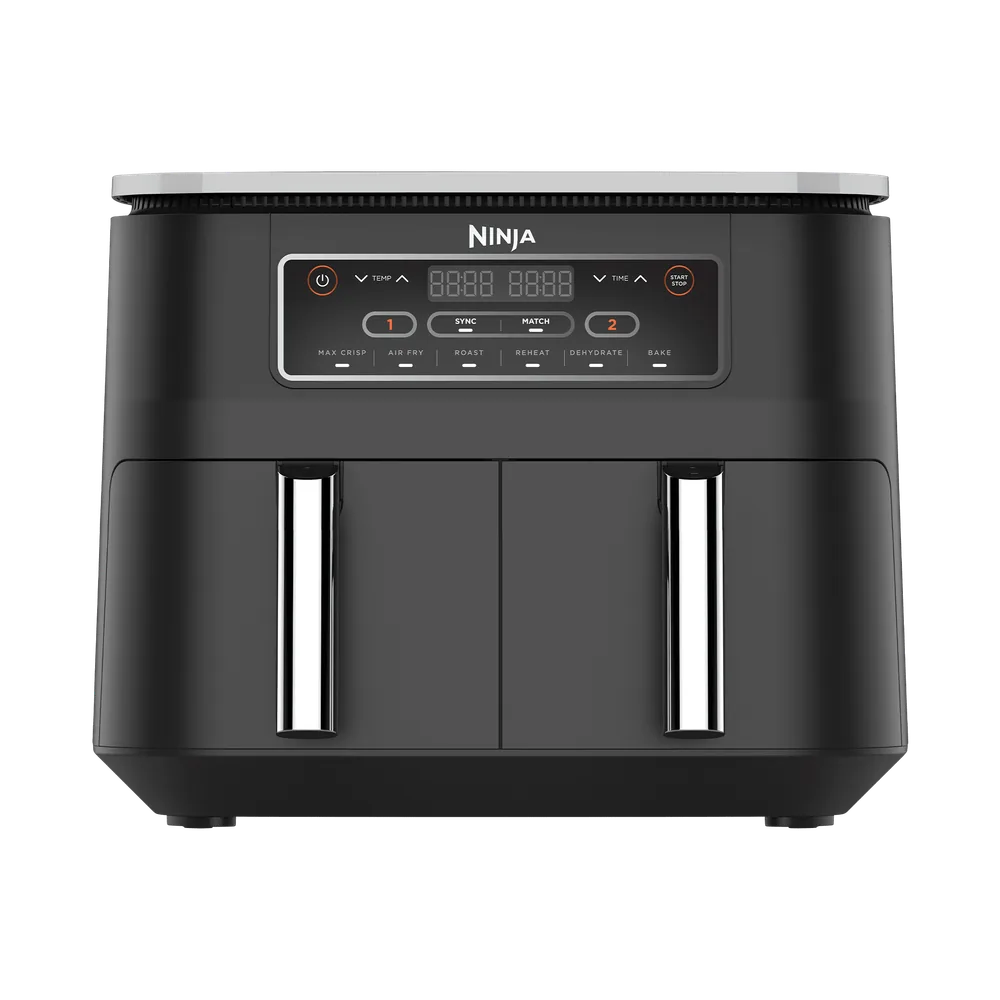
Ninja's Australian AF400 feature guide distinguishes Smart Finish for different foods from Match Cook for copying settings. These names and behaviours belong to that documented regional model. Your machine may use different names or controls, so verify them in its matching instructions. A finish-together feature coordinates programme timing; it does not inspect either food or replace the checks required for that food.
Allow for handling, not just the countdown
A dinner schedule includes opening drawers, using appropriate tools, making endpoint checks and serving. Put those actions into the plan. If both baskets complete together but you need several minutes to check and assemble everything, that matters. Identify which food must be handled first and place a clean receiving dish nearby. Do not choose a layout that leaves you balancing one hot basket while reaching into the other.
For example, a couple prepares a main in one zone and vegetables in the second. Their useful plan might include preparing plates before starting and assigning one person to the temperature check while the other finishes the table. The meal is simpler because each task has an owner and an endpoint, not because the machine is assumed to cook every pairing automatically.
Check whether the quantities are compatible
Estimate the usable layout for each food separately with the appliance cold. A large main can crowd one basket while a light side barely covers the other. Nominal total capacity does not mean the load is well balanced for your dinner. If one food needs several batches, a finish-together setting for the last batch cannot solve the earlier serving problem. Reduce the meal quantity or use another supported cooking method.
Keep sauces, garnishes and cold accompaniments outside the two-zone calculation unless they genuinely require those cooking spaces. A complete dinner may be easier when only two components occupy the appliance and the rest are prepared separately. Also check whether the manufacturer provides different guidance when using both zones. Do not transfer a single-basket observation blindly to a two-basket meal and call the difference a machine fault.
Know how you will respond to an unfinished zone
Before starting, read the controls for stopping, pausing or extending an individual zone. If one food fails its endpoint check, you need a supported way to continue it without treating the other basket as unfinished by association. Finish-together is a scheduling preference, not a requirement to serve both foods immediately at the beep. Safety and appropriate doneness remain separate decisions for the two components.
Record each basket's actual quantity, mode and checks, along with whether you used a linked finish feature. A good household note preserves the pairing and any handling changes. When trying a new side dish later, keep the familiar main method but reassess the new side rather than copying the old programme wholesale. This produces a flexible dinner plan grounded in two known tasks, instead of a growing list of speculative combinations.
Behind this guide
Sources & editorial method
This guide combines original editorial decision support with the linked documentation. It is not a hands-on product test. Check the exact regional model and its manual before purchasing or using an appliance.
How we research and publish our guides