On this page
Start here
Identify the original recipe conditions
Read the original method closely before altering it. Does oven mean conventional heat, fan-assisted heat or a particular countertop appliance? What dish size, food quantity and starting condition does it assume? Those details matter more than a catchy conversion rule. If the recipe is vague about its own setup, adapting it introduces another layer of uncertainty. Find a clearer method before using it for food with demanding safety checks.
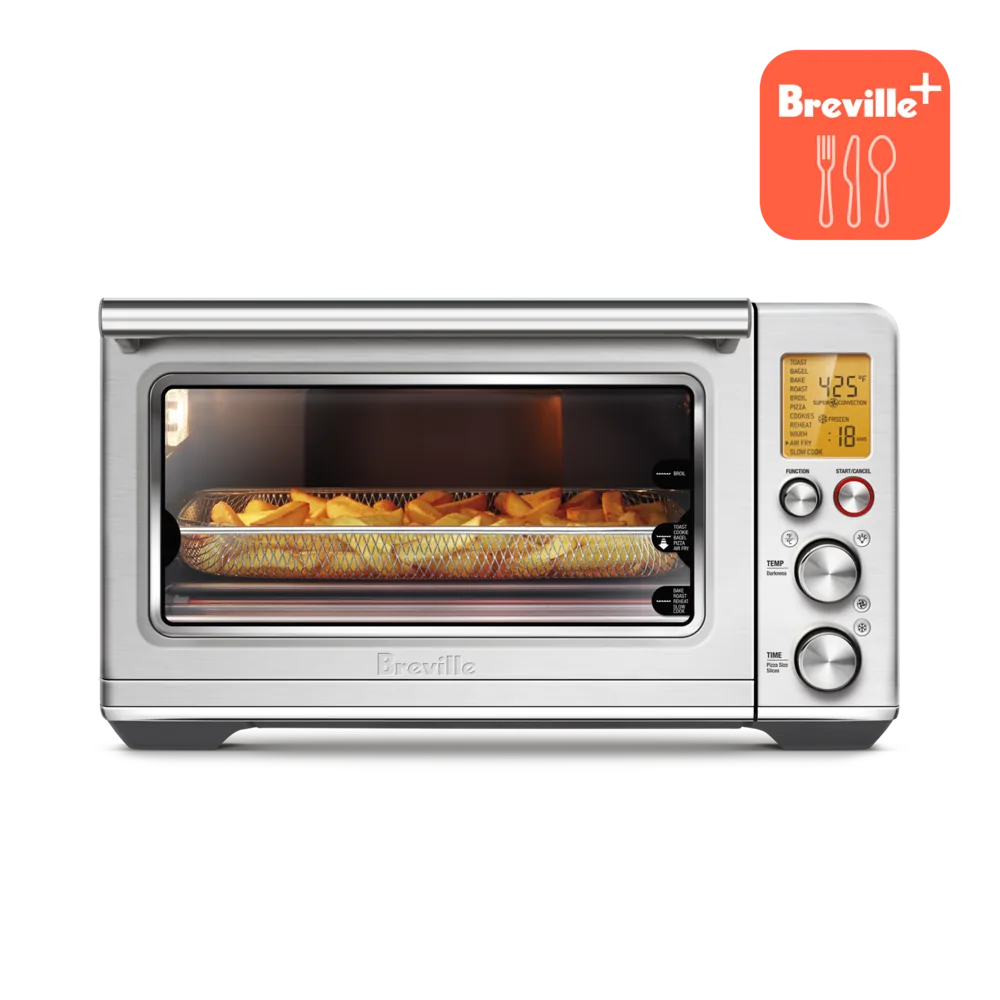
Breville's regional BOV860 book provides function-specific controls and placement. It is a useful example of an appliance requiring its own operating method. It does not validate a single percentage reduction for every basket machine. A countertop oven recipe and a basket recipe can differ in practical arrangement as well as controls. Keep the original appliance assumptions visible rather than calling all fan-driven cooking interchangeable.
Check geometry before adjusting settings
Compare the intended dish and food depth with the supported arrangement in your appliance. Reducing a recipe's ingredients without changing the pan appropriately can create a shallower preparation; squeezing the same amount into a smaller vessel can create a deeper one. Neither change is explained by a time-only conversion. The new preparation needs a suitable method and endpoint, not just an adjusted number on the display.
Imagine an oven recipe using a broad casserole dish. Your basket accepts only a narrow container. You might decide to make a smaller portion in a compatible dish, use a verified air-fryer version, or keep the original oven method. Each is a clearer choice than forcing the entire recipe into the narrow dish and hoping extra time reaches the centre. Check the vessel and its handling route before preparing the ingredients.
Choose a supported starting method
Look for a manufacturer recipe or reliable product instruction for the same food structure in your model. A matching preparation can reveal whether the food should be open, pan-contained, divided or cooked in stages. Use the complete method rather than harvesting one setting from it. When no suitable air-fryer method exists, using the original appliance can be more practical than attempting an unsupported conversion for the first time at dinner.
Keep cooking temperature separate from food internal temperature. A changed dial value does not change the safe endpoint for a raw ingredient. Identify the appropriate checks before starting and have the needed equipment ready. Avoid recipes that encourage colour alone as proof for foods requiring an internal measurement. An adaptation is useful only if you can assess the finished food properly, not merely make the timer run for a plausible duration.
Change one variable and describe the result
For a low-risk preparation with supported instructions, keep a record of your appliance, mode, vessel, quantity, depth and checks. If a later attempt changes the pan or portion, reassess it as a changed method. Do not automatically retain the previous duration. Describe specific observations such as a dry edge or uneven surface instead of writing simply failed; those details make the next decision more useful.
Do not present personal kitchen notes as tested universal conversions. They describe one arrangement in one appliance. A helpful published or shared note should state that scope and retain the endpoint checks. The strongest conversion decision is often to find an actual air-fryer recipe for the intended food. That avoids asking a simple arithmetic rule to account for equipment, geometry, ingredients and handling differences it was never designed to explain.
Behind this guide
Sources & editorial method
This guide combines original editorial decision support with the linked documentation. It is not a hands-on product test. Check the exact regional model and its manual before purchasing or using an appliance.
How we research and publish our guides