On this page
Start here
Choose around who cooks at the same time
For a shared household, start with the pattern of use rather than the number of residents. Several housemates eating at different times may need a straightforward single-portion routine more than a very large basket. People cooking separate components together may find independent zones useful. Count simultaneous jobs, not only beds in the house.
Agree what the appliance is expected to do before buying it together. Is it a communal cooking tool, a device one person mostly uses, or a way to reduce competition for the oven? Each purpose leads to a different shortlist and a different arrangement for cleaning and storage.
Map a busy evening
Write down who wants to cook, when, and which components need the appliance. Identify overlaps and the usual portion shapes. If one person regularly wants a large flat item, check whether an individual dual basket can fit it. Combined capacity does not create shared space across separate drawers.
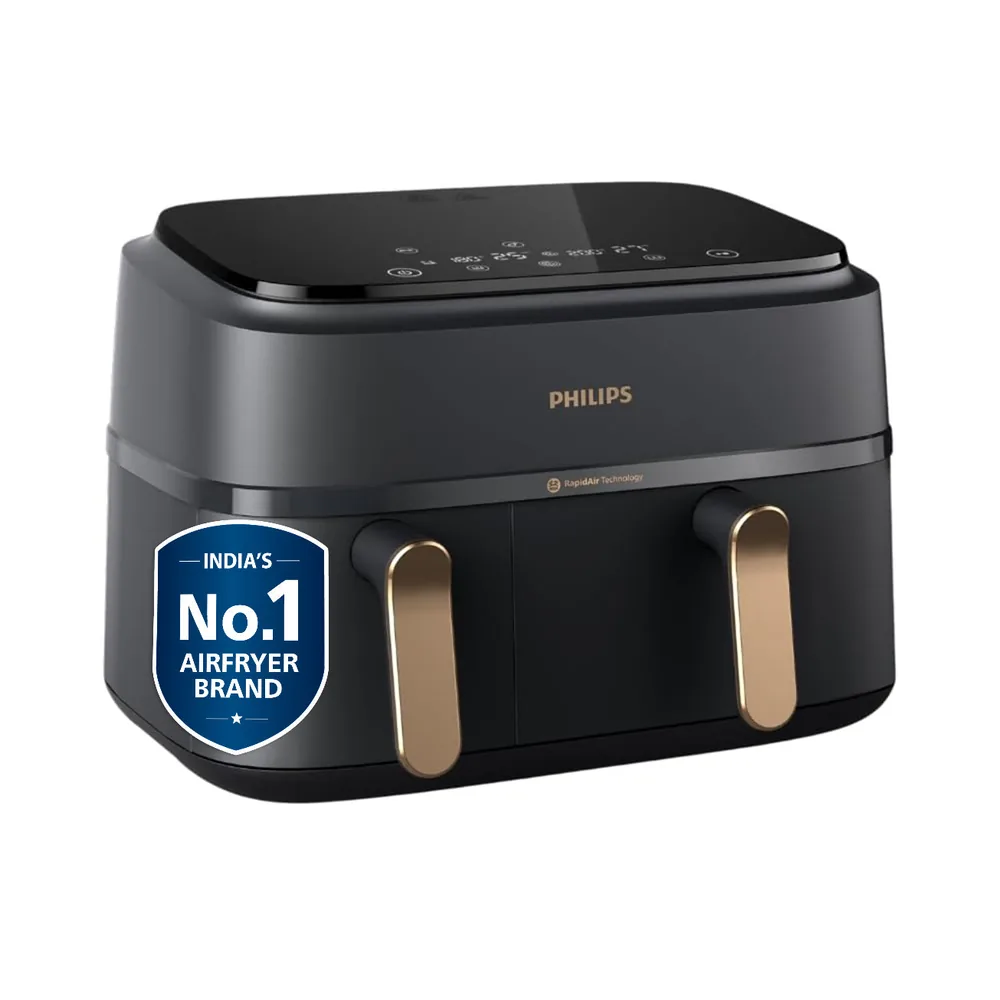
Philips' NA352/00 is a documented example of a dual-basket layout. Use its page to understand the format, then verify actual fit and operation. Two zones can help organize tasks, but they do not automatically eliminate waiting when several people want the same appliance.
Clear controls help occasional users
Read how to select a mode, change time and temperature, identify a zone, and cancel. A household appliance may be used by someone who has not operated it for weeks. The ordinary sequence should be clear enough that people do not guess which drawer or program is active.
Place the matching manual or an official support link where everyone can find it. Do not create an improvised abbreviated procedure that omits manufacturer requirements. The goal is shared understanding of the documented routine, not replacing the instructions with assumptions.
Agree on food and cleaning expectations
Talk about who cleans removable parts, where they dry, and when the appliance is available for the next person. Check the manual's permitted cleaning methods. A machine that is always waiting to be washed can become a shared-kitchen bottleneck regardless of capacity.
Separate drawers may help organize foods, but allergen cross-contact and dietary-safety requirements need their own appropriate guidance. Where that matters, use appropriate official guidance and a clearly agreed arrangement rather than assuming a physical divider provides a guarantee.
Decide who owns the records and parts
Keep the model reference, manual, seller details, and support information in a shared location without exposing private purchase data publicly. Agree how to handle missing accessories or a fault. Someone should know which compatible part belongs to the exact reference.
If the household may change soon, decide who will keep the appliance. A large communal purchase can be sensible when everyone understands the arrangement, but a smaller personal appliance may be easier when ownership is temporary. That is a planning preference, not a brand performance claim.
A divided-ownership example
Suppose two housemates share meals on weekends but cook separately during the week. They may value a simple individual routine with enough verified area for the weekend task. Another household overlaps at dinner every day and may prioritize independent zones or continued use of another appliance. Agree which pattern the purchase must support and who handles cleaning. Also agree who keeps the device if someone moves out. These practical choices can prevent a large shared purchase from becoming a source of friction, even when the product itself meets its specifications.
A shared-kitchen purchase rule
Choose an appliance that handles the busiest recurring use pattern, has controls occasional users understand, and fits an agreed cleaning routine. Independent zones deserve attention when they solve real overlaps. A larger volume deserves attention when a shared meal genuinely needs it. Neither should substitute for a clear household plan.
- Count simultaneous cooking tasks on a normal busy evening.
- Measure individual portions and any larger shared item.
- Check controls for someone who uses the device only occasionally.
- Agree on cleaning, drying, and next-user availability.
- Do not treat separate drawers as an allergen-safety guarantee.
- Keep exact model and support records with a clear owner.
Behind this guide
Sources & editorial method
This guide combines original editorial decision support with the linked documentation. It is not a hands-on product test. Check the exact regional model and its manual before purchasing or using an appliance.
- Philips NA352/00 3000 Series Dual-Basket product details ↗Checked
- Instant Pot UK model-specific manuals ↗Checked