On this page
Start here
Identify the surfaces before starting
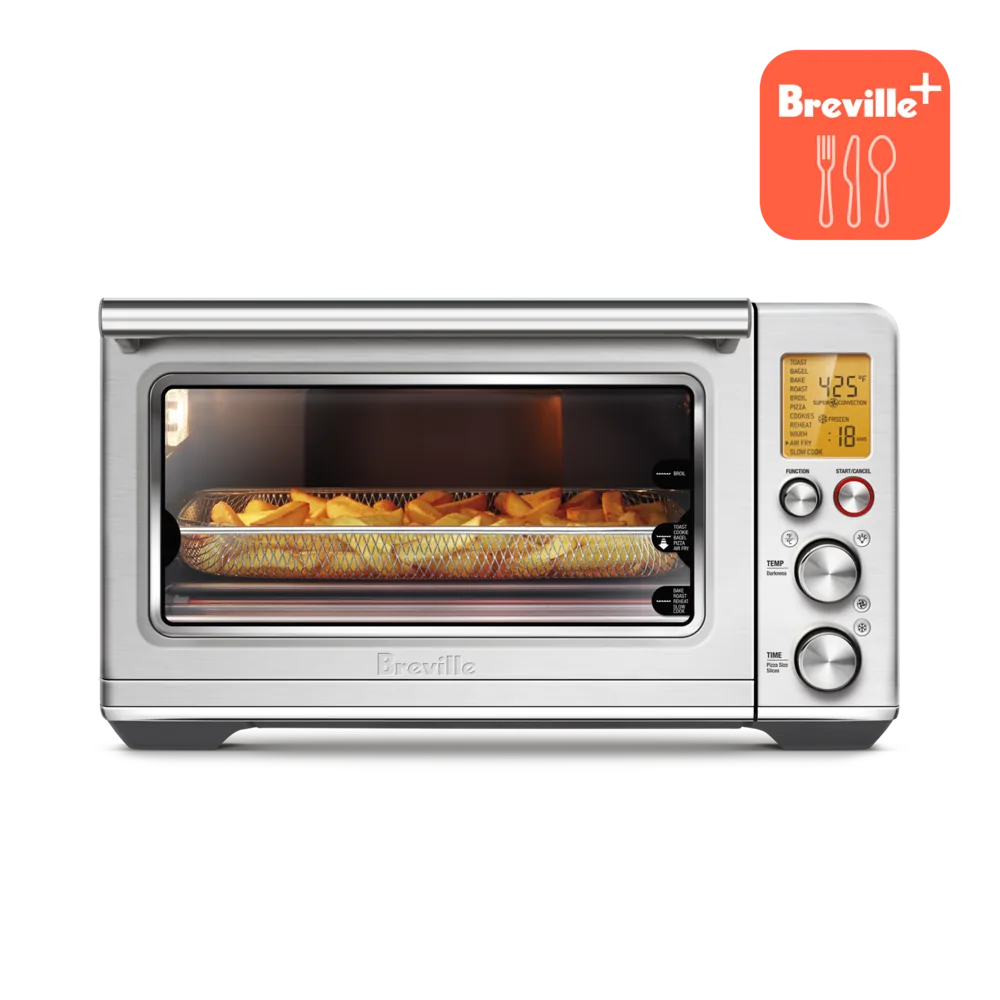
For the cited BOV860, unplug and cool before care. Apply the permitted cleaner to a soft cloth or sponge, then treat the display and door according to their separate instructions. The exterior includes different materials and functions: a display, knobs, a handle, fixed panels and perhaps a window. Look at the exact care instructions before choosing one treatment for all of them. A basket-washing procedure does not describe control-panel cleaning. Likewise, a method for an oven door may not apply to the plastic fascia of a basket model. Name each surface and keep its approved procedure visible.
Breville's regional BOV860 book says to apply cleaner to the cloth rather than directly to the LCD surface. That is a specific instruction from a particular document. It illustrates why a control panel deserves its own care check. Follow your appliance's matching guidance for preparation, tools and liquid use instead of assuming a kitchen surface spray can be applied wherever fingerprints appear.
Keep the job separate from operation
Arrange the cleaning when the appliance can be prepared according to its instructions, rather than trying to wipe around a running meal. Put loose utensils and other items away so you can see the surface clearly. Do not use a display response as an excuse to continue cleaning while operating controls unintentionally. If the panel reacts in an unfamiliar way, consult its instructions before starting another cooking programme.
For an example, a household notices greasy fingerprints after several shared meals. The useful response is a planned exterior-care step with the correct cloth and source guidance. It is not to spray the panel whenever someone touches it. A deliberate routine is easier to control and creates an opportunity to notice a cracked button, damaged marking or other changed condition without mistaking it for ordinary dirt.
Protect information you need later
Rating labels, warning markings and control symbols are useful operating information. Follow the manual's restrictions and avoid treating them as decorative stickers to remove during cleaning. If a label becomes unreadable, photograph any remaining information and ask the manufacturer how to identify the appliance. Do not replace uncertain electrical data from a similar product page. The exact unit's identity remains important for manuals, accessories, service and recall checks.
Distinguish a cosmetic mark from a control fault. A dull patch after cleaning is one observation; a button that no longer responds is another. Record what changed, which approved method was used and whether any unusual operation occurred. Do not keep repeating a wet wipe to fix a display problem. The support request should describe the controls separately from the exterior's appearance, so the manufacturer can address the actual question.
Make surface care a short complete task
Once the supported procedure is complete, leave the appliance in the state the instructions require before operation. Keep cleaning materials away from the cooking area and do not leave a cloth draped over the housing as a reminder. If there is an unresolved control or surface issue, mark the appliance unavailable and tell other users what needs advice. A clean-looking panel is not evidence that an uncertain fault is gone.
A practical household note can list the permitted tool and method for the panel, exterior and any window separately. Keep it brief and attach the exact manual source. Review it when replacing the appliance or adding a new accessory, because appearance alone cannot establish common materials or cleaning limits. The purpose of exterior care is to maintain accessible surfaces and readable controls within documented instructions, without turning food-contact washing into a whole-machine treatment.
Behind this guide
Sources & editorial method
This guide combines original editorial decision support with the linked documentation. It is not a hands-on product test. Check the exact regional model and its manual before purchasing or using an appliance.
How we research and publish our guides