On this page
Start here
Treat the handle as a handling component
Leave the appliance out of use when its handle is cracked or loose. Record the visible condition and ask about the approved replacement or service route before loading or lifting it. A handle is part of how you move the basket or door, not merely a cosmetic trim. If it appears cracked or loose, leave the appliance out of use while obtaining the appropriate manufacturer advice. Do not load it with food to see whether it still holds. A gentle-looking test cannot establish what will happen during hot handling, and it adds unnecessary uncertainty to a part whose purpose is controlled movement.
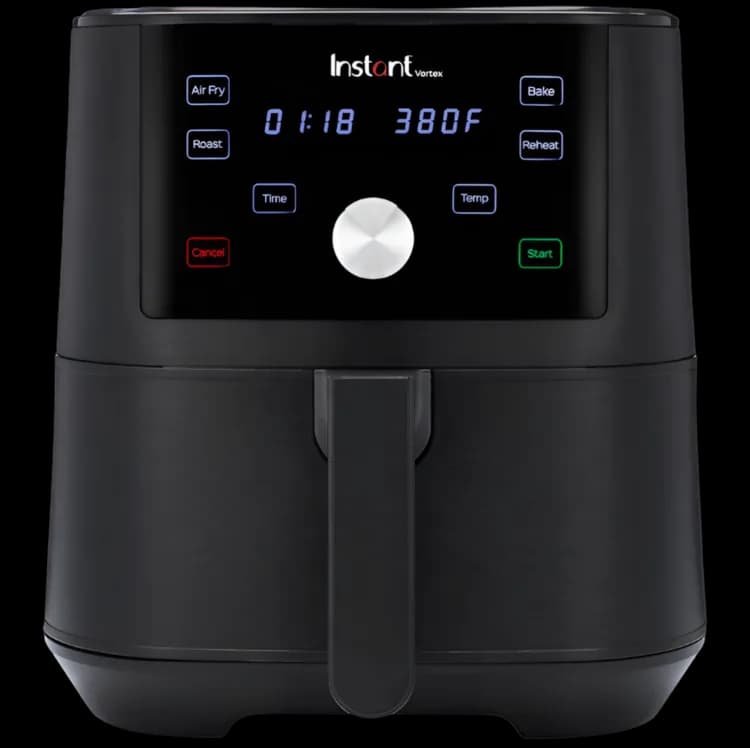
Instant's regional Vortex oven manual requires manufacturer-authorised accessories and parts. That is a useful documented boundary for replacement decisions, though it does not identify the correct handle for a different Vortex or basket appliance. Match the entire reference and component through the manufacturer's parts or service route rather than relying on colour, approximate shape or a marketplace claim that the part is universal.
Photograph the condition while cold
Use the manual's safe handling instructions and document the visible crack or loose area without applying extra force. Show the complete component and a closer view so support can locate the issue. Note whether the change was present at delivery, followed a fall or developed during normal use. Keep the observation separate from a theory about fasteners, plastic or heat. The exact history helps support choose the right next step.
For an example, a household notices movement at the basket handle after washing up. They record that timing and stop using the component instead of tightening an accessible-looking screw. A fastener may belong to an assembly the owner is not meant to service, and tightening it does not necessarily resolve a cracked part. The useful evidence is the condition and event sequence, not an improvised repair performed before asking.
Avoid temporary fixes for hot handling
Do not rely on tape, glue or a makeshift grip to continue lifting the basket. A product's adhesion claim at room temperature does not establish support for a loaded appliance component during cooking. Likewise, holding the basket by another exposed area is not a substitute for the manufacturer's handling method. Keep the unit unavailable rather than inventing a route around the very part that normally makes movement manageable.
If support proposes replacing a complete drawer assembly instead of a separate handle, assess that exact option and its installation instructions. Do not assume every model permits owner replacement of individual pieces. Keep the part number, regional reference and support guidance together. A successful physical fit is only part of the question; the approved component must also support the appliance's normal seating and handling requirements.
Make the household status unmistakable
Tell anyone sharing the appliance that the handle condition is unresolved and that the basket should not be used for a meal. A short note prevents another person from assuming the issue is just an unattractive mark. Keep loose components with the appliance record rather than returning them to a drawer where they might be mistaken for ready accessories. Do not hide the crack beneath a wrap intended to make the kitchen look tidy.
After the manufacturer remedy, retain the replacement identity or service record and follow the supplied readiness instructions. If the issue was assessed as cosmetic, keep that scoped answer with the photographs instead of extending it to future changes. The useful outcome is a documented handling decision for the exact part. It should restore a supported way to move the cooking components, rather than merely making an uncertain handle feel firmer for one more session.
Behind this guide
Sources & editorial method
This guide combines original editorial decision support with the linked documentation. It is not a hands-on product test. Check the exact regional model and its manual before purchasing or using an appliance.
How we research and publish our guides