On this page
Start here
Choose the form that fits the documented method
Choose a whole chicken only when the appliance instructions and a suitable recipe support its fit and handling. Choose pieces when the planned meal or cooking layout suits them better. A chicken program does not establish that every bird, cut, or quantity can use the same arrangement.
Start with the actual food and model. Record whether the chicken is whole or portioned and whether it is in the preparation state your method expects. Match the preparation and required food checks to your chosen method, and confirm the actual bird or pieces fit the supported arrangement.
Food fit is more than the advertised litres
Check the usable area, height, approved accessories, and maximum-loading guidance for the exact appliance. A whole bird has a different shape from several pieces, while pieces can occupy more horizontal surface than their total weight suggests. Do not rely on a product demonstration using an unidentified amount.
Keep room for the handling and checks the method calls for. If the food cannot fit as instructed, choose pieces, another suitable appliance, or an appropriate recipe rather than forcing the basket closed. The supported arrangement is a prerequisite, not an optional preference.
Plan the temperature check before loading
US FoodSafety.gov specifies 165°F / 74°C for poultry, including whole birds and pieces. A model's displayed cooking temperature is different from the food's measured internal temperature. Use suitable official guidance for your location and a food thermometer according to its instructions.
If the appliance has an integrated probe, obtain its current instructions and check the supported food and placement. Ninja's AF451UK page identifies a probe-equipped model, but the feature listing does not answer every operating question. Confirm a compatible checking setup before using it for the chicken you selected.
Consider the serving and handling difference
A whole bird and separate pieces create different preparation and serving tasks. Write down the actions needed to load the food, inspect it, remove it, and portion it, following the chosen instructions. Compare those actions with what you actually want at dinner.
A household wanting different cuts may prefer planning pieces. A household wanting a whole-bird serving needs verified fit and its own method. Neither preference proves a faster or better outcome for every appliance. Keep the recommendation tied to the actual meal.
Do not mix sizes and assume one timer resolves them
If your method expects similar pieces, keep that preparation consistent. A batch of very different sizes is not automatically equivalent to the recipe's quantity. Follow appropriate completion checks for the food rather than treating the preset's end signal as sufficient evidence.
Record the cuts and approximate size description in your cooking note. If one part behaves differently, describe it specifically. That observation helps choose a better-matched method next time without inventing a universal adjustment for all chicken.
Example: write a chicken dinner plan
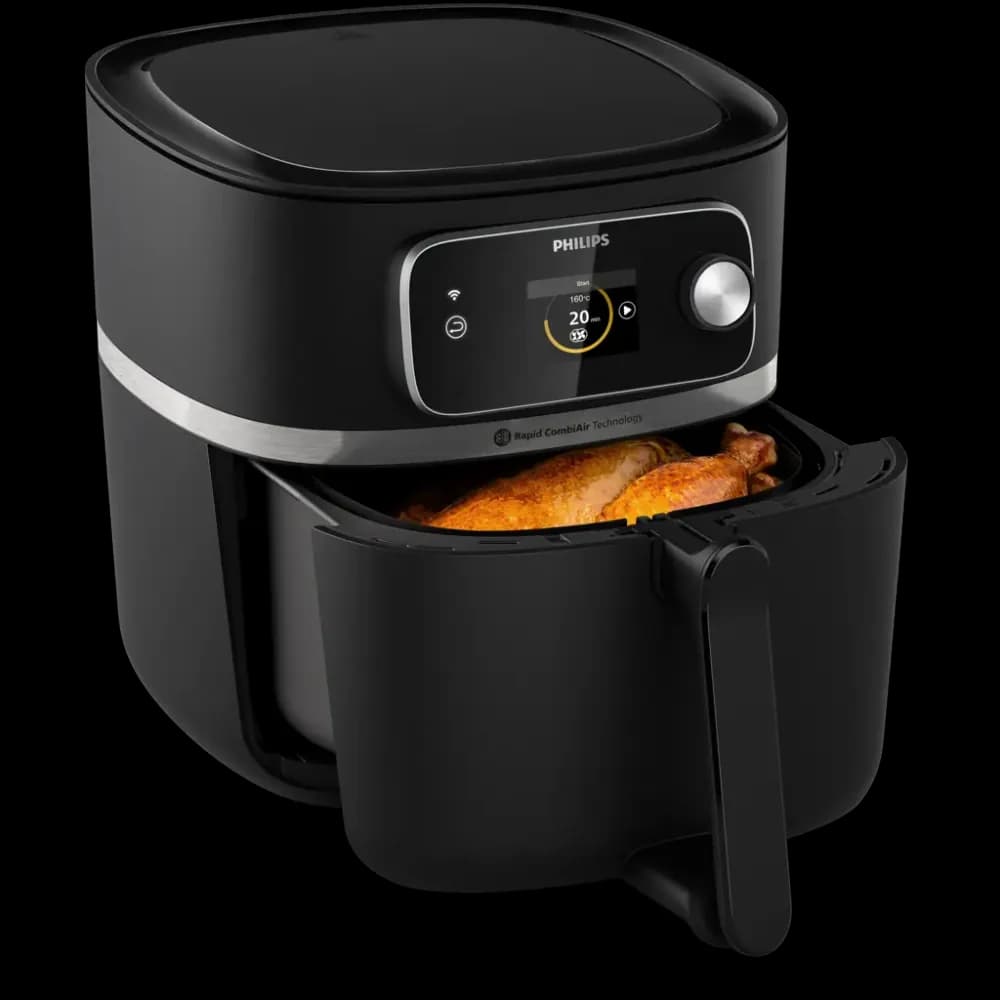
Suppose you are deciding between individual chicken pieces and a whole bird for a weekend meal. List the exact recipe, the food dimensions, the required appliance arrangement, and the checks it specifies for each option. Add the space needed for vegetables or another side. If the whole bird cannot be matched to supported guidance and an appropriate fit, select another preparation rather than trying to make the basket volume alone settle the decision. The comparison concerns a complete usable method, including checking the food, rather than the most dramatic photograph of a finished roast.
A whole-versus-pieces decision record
Choose the form that meets your meal needs, fits the supported arrangement, and allows the required checks. Keep the recipe, model, food state, and observation together. Good planning starts before the appliance is switched on.
- Identify whole bird or exact cuts and preparation state.
- Verify usable space and supported loading.
- Plan appropriate thermometer access.
- Follow integrated-probe restrictions if using that feature.
- Compare removal and serving tasks, not only total weight.
- Keep food-doneness checks separate from the program timer.
Behind this guide
Sources & editorial method
This guide combines original editorial decision support with the linked documentation. It is not a hands-on product test. Check the exact regional model and its manual before purchasing or using an appliance.
- FoodSafety.gov safe minimum internal-temperature chart ↗Checked
- Ninja AF451UK Smart Cook System product details ↗Checked