On this page
Start here
Choose the shape that fits the working counter
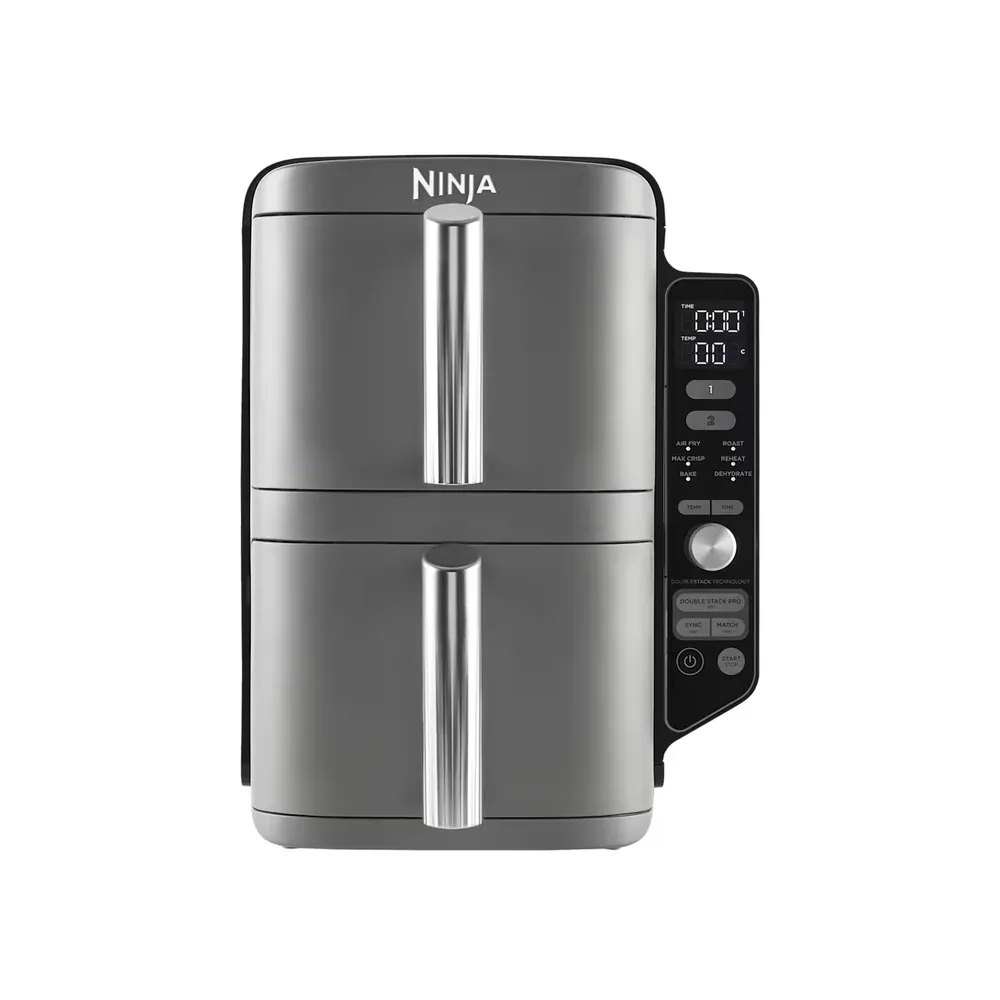
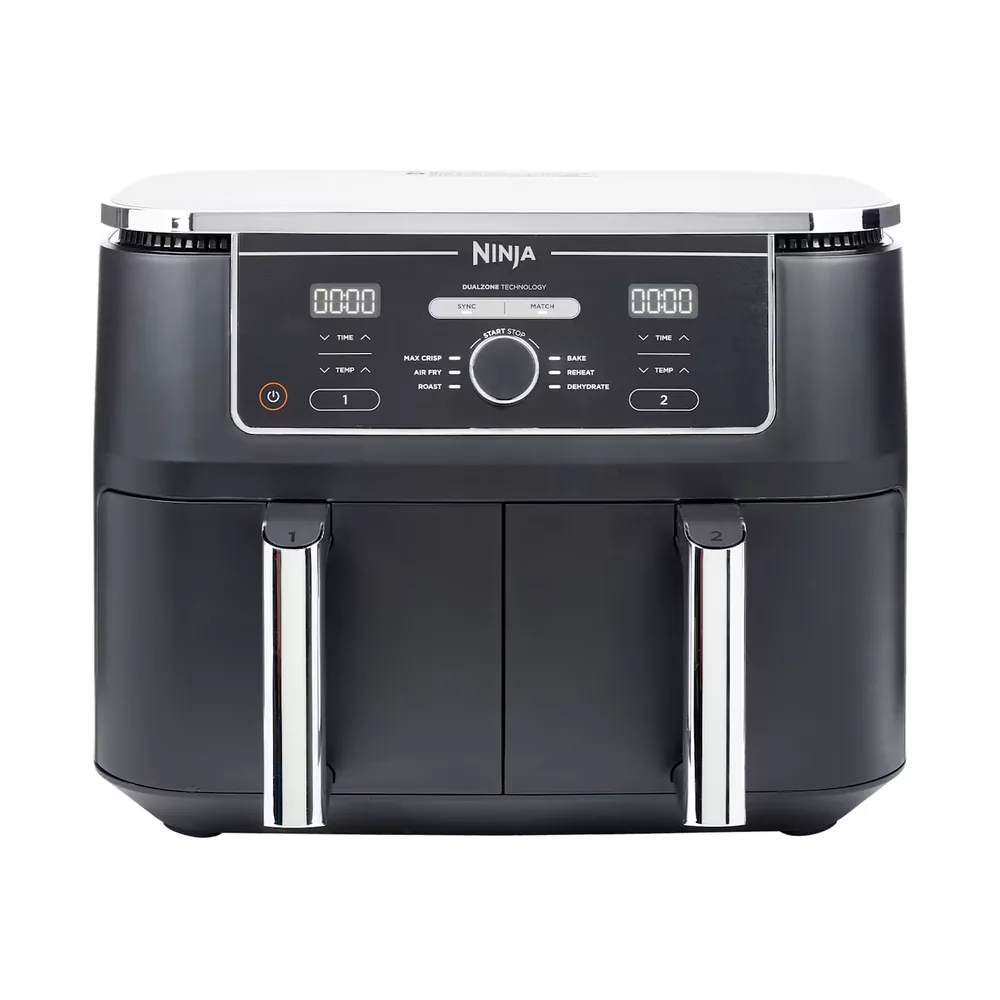
A stacked air fryer is worth investigating when counter width is your main constraint. A side-by-side design may be a better fit when depth or overhead space is tighter. The useful comparison is the complete operating footprint, including drawers and required ventilation, rather than a photograph of the closed appliance.
A narrow body can still be deep. A lower, wider body may fit beneath a cupboard more easily. Neither arrangement is automatically compact in every kitchen. Measure the available space in three dimensions before deciding which layout solves your problem.
Use a documented model as a measuring example
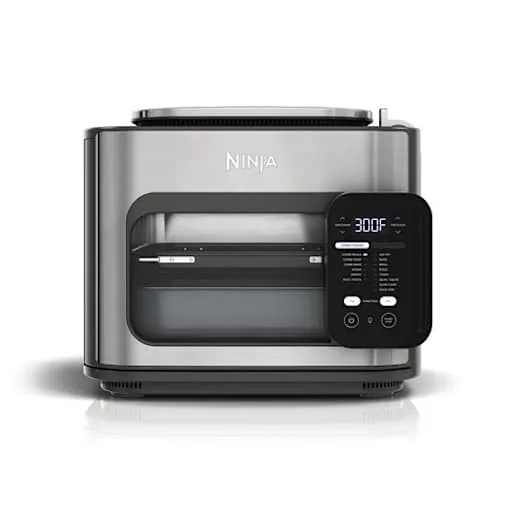
Ninja Ireland lists the SL400UK body as 38.5 cm high, 28.0 cm wide including its control panel, and 47.0 cm deep. Its support section also gives ventilation guidance. These are measurements for that specific model, not a rule for every stacked air fryer.
The example shows why width alone is insufficient. Transfer the complete dimensions to a cardboard outline on your counter, then check the exact manual for the space needed around it. Use an unpowered paper or cardboard planning template only, not a cover or platform during operation.
Check the drawer path
Mark where each drawer travels when removed. Consider whether the upper drawer is comfortable to lift at your counter height and whether the lower drawer clears nearby objects. For side-by-side models, check both handles against the surrounding work area.
Include a place for removed parts and access to the controls. If the appliance can only be used by moving the kettle, toaster, or preparation board every time, that rearrangement belongs in the buying decision. A device that fits when closed has passed only the storage check.
Do not equate racks with extra zones
Some stacked designs also use racks inside their drawers. Confirm whether those racks provide extra food levels within one controlled zone or independent settings. Those are different features. Read instructions for loading and handling each level rather than assuming every layer functions like a separate basket.
Compare the internal surfaces with your recurring food. A narrow drawer may suit smaller portions while limiting a wider dish. The total volume label cannot explain whether the arrangement you need is practical. Treat manufacturer food examples as examples with their own loading assumptions.
Balance visibility and reach
The control location can matter as much as the body dimensions. Stand where you normally cook and check whether you could read the display without leaning over the appliance. Think about drawer handling, wrist angle, and whether the removable part has a clear landing area.
If the air fryer is intended for someone else, include them in the comparison. A compact shape that is comfortable for one person may be awkward for another. Do not make accessibility claims from dimensions alone. A showroom handling check and the model manual are more informative than a compact badge.
The narrow-counter example
Suppose you have a narrow counter section with generous depth, no low cupboard, and a practical place for removed drawers. A stacked layout could deserve attention. Now move the same appliance to a shallow counter beneath storage cupboards. The narrow width may no longer solve the important constraints. Do not reuse a compact rating from one kitchen layout in another. Recreate the complete operating outline each time, including the clearance in the model instructions, the opening path, and the standing position of the regular cook.
Make the final comparison on paper
Draw the operating outline of a stacked model and a side-by-side model on the same counter plan. Reject any that do not meet their own installation guidance. Then compare food fit, control access, and cleaning. Choose the layout that leaves your kitchen usable throughout dinner preparation, not merely the one with the narrowest case.
- Record body width, depth, and height including handles and controls.
- Add the model-specific ventilation space from its manual.
- Mark the route and landing area for every removable drawer.
- Check upper-drawer reach at your actual counter height.
- Distinguish rack levels from independently controlled zones.
- Confirm sink and storage fit for the removable parts.
Behind this guide
Sources & editorial method
This guide combines original editorial decision support with the linked documentation. It is not a hands-on product test. Check the exact regional model and its manual before purchasing or using an appliance.
- Ninja Ireland SL400UK dimensions and support ↗Checked
- Ninja AF500UK FlexDrawer product details ↗Checked