On this page
Start here
Confirm that the programme exists on your model
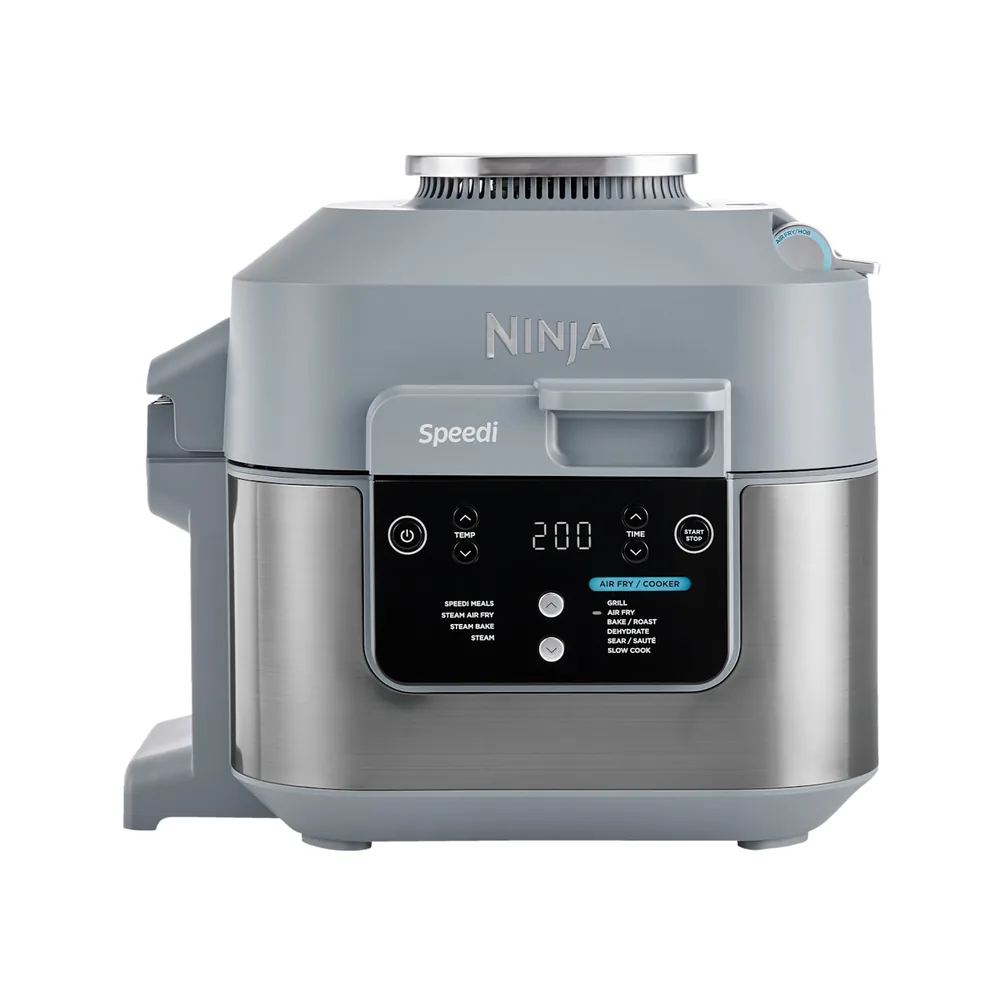
Steam-and-crisp cooking is a particular appliance capability, not a technique to add to any ordinary basket fryer. Identify the exact reference and the supported programme before planning ingredients. Do not pour water into a standard air fryer to imitate a steam cooker. A named meal mode may require a particular pot, tray and preparation sequence, and another generation can use different accessories or controls.
Ninja Test Kitchen's US chicken-and-rice method identifies ingredients in the bottom of the pot and others on an elevated crisper tray. That supports checking the layer arrangement in a complete recipe; it does not establish a liquid ratio or programme for every Speedi reference. If your model or ingredients differ, find matching instructions rather than copying the visible two-level idea and guessing the rest.
Write each component into a layer plan
List the intended grain, liquid, vegetables and main component using a supported recipe for the exact cooker. Identify what goes into the pot and what belongs on the tray. Do not infer the liquid quantity from a stovetop packet unless the appliance recipe explicitly uses that instruction. A layered meal is a combined method: substituting one component may affect the setup assumptions, so check substitutions before assembling the rest.
Imagine wanting to replace the recipe's grain with a different pasta shape. Rather than assuming the same amount and liquid will work, look for an approved version or suitable manufacturer guidance. If none exists, prepare that component separately and use a supported method for the remaining food. This practical decision keeps the meal manageable without inventing a water ratio or a universal promise that any carbohydrate works beneath any main.
Plan access and endpoint checks
A tray can hide the lower component. Read the instructions for installation, removal and any permitted mid-cook checks before starting. Prepare suitable tools and a stable landing place for hot accessories. Identify how the main food will be assessed and how you will inspect the lower portion. Finishing a programme does not eliminate food-specific checks, particularly when a raw ingredient is part of the upper layer.
Consider serving as well as cooking. If removing the upper tray occupies the only clear space on your counter, you may struggle to portion the lower food. Arrange plates, utensils and receiving dishes beforehand. A compact appliance can still demand room during handling. The point of a layered meal is convenience within its supported method, not reducing workspace until every hot part must be balanced on another item.
Record substitutions separately
Keep the manufacturer's recipe name and exact model alongside ingredient quantities, preparation and accessory positions. Record any permitted substitution clearly instead of calling the result the original recipe. If you change both the main and lower layer, you no longer have a simple comparison with the earlier meal. Find a suitable combined method or make the components separately rather than adjusting several unknowns at once.
For repeat dinners, keep a short note of the actual endpoint checks and whether the arrangement was easy to remove and serve. Do not publish personal results as a claim that the cooker makes every layered meal in a fixed time. Steam-and-crisp can be a useful documented workflow, but the useful unit is the complete supported meal method. Matching the programme, liquid, tray and ingredients matters more than reproducing the general appearance of a recipe photograph.
Behind this guide
Sources & editorial method
This guide combines original editorial decision support with the linked documentation. It is not a hands-on product test. Check the exact regional model and its manual before purchasing or using an appliance.
How we research and publish our guides