On this page
Start here
Match the appliance to its instructions
Identify the model, inspect the supplied parts and remove the packaging identified in its instructions. Complete the documented cleaning and setup before choosing a simple supported first meal. Find the full reference on the unit and obtain the corresponding regional manual before planning the first meal. Confirm that the diagrams and accessories match what you received. A similar product-family name may cover different controls or parts. Keep the supplied documentation available while setting up rather than relying on a short retailer video. If something is missing, damaged or inconsistent, resolve that with the seller or manufacturer before use.
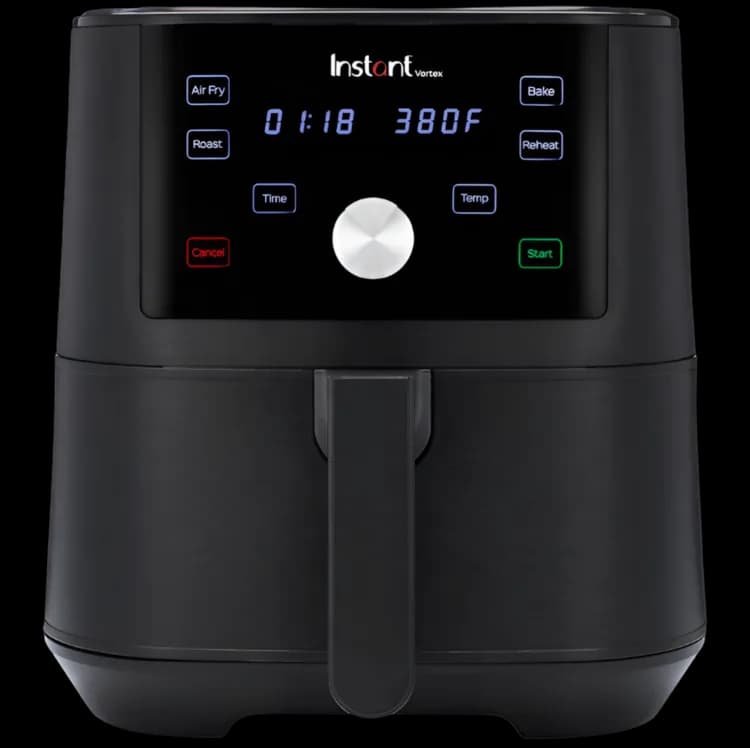
The Instant Vortex EU manual directs owners to check for loose packing material in the cooking chamber and retain safety and rating labels. Those are useful documented setup steps for that model. They do not describe the complete procedure for every fryer. Use your matching instructions for preparation, placement, initial cleaning and any first-run requirements rather than treating one checklist as universal.
Account for the supplied components
Lay out the owner-removable parts as the manual identifies them. Check which pieces are installed for cooking and which are separate accessories. Do not discard an unfamiliar item as packaging until you have identified it. Likewise, do not remove attached feet, seals or warning labels merely because their material looks temporary. The component diagram should answer what belongs with the appliance and how the parts are assembled.
For an example, a new cook finds an insert in the basket and a separate small accessory bag. They pause to identify both instead of starting a meal with whichever pieces seem intuitive. That few minutes of reading can prevent uncertainty later when the drawer does not seat or the recipe expects an accessory. The practical aim is a complete known setup, not learning the parts while they are hot.
Choose a supported location and sequence
Read the installation and operating-clearance instructions for the exact model and prepare the surface accordingly. Consider the drawer's opening route or the lid's movement as well as the appliance's closed footprint. Keep nearby items from becoming temporary storage on the housing. A location that looks tidy when the machine is closed may still make loading and removing food awkward. Arrange a stable landing place for permitted hot-component handling.
Follow the initial cleaning and any prescribed first-run sequence in the manual. Do not add a maximum-temperature burn-off from another brand or put a liner into an empty cycle without explicit support. If the first-use instructions are unavailable or contradictory, ask the manufacturer before proceeding. Treat an unusual strong smell, smoke or other concerning symptom through its safety guidance rather than assuming that setup automatically explains it.
Make the first meal a clear task
Choose a complete supported preparation with a manageable load and suitable endpoint checks. Avoid making the first session a complex combination of unfamiliar accessories, multiple foods and guessed settings. Have the required utensils and measuring equipment ready, then follow the method. Record what the controls display at each relevant stage so their meaning is clear for later meals, without turning the first use into a claimed performance test.
After the meal, complete the manual's care and readiness steps and save the exact model, manual link and accessory list. This short record is useful for everyone sharing the appliance. If a question arose, write it down before the packaging is put away. A good first-use outcome is confidence about identity, assembly, supported operation and care. It does not depend on proving the appliance can cook every food immediately or copying an enthusiastic reviewer's first-day routine.
Behind this guide
Sources & editorial method
This guide combines original editorial decision support with the linked documentation. It is not a hands-on product test. Check the exact regional model and its manual before purchasing or using an appliance.
How we research and publish our guides