On this page
Start here
Breaded and wet-battered foods are different starting points
Do not assume an air-fryer method for breaded food also works for a liquid batter. Identify the coating, whether the product is raw or prepared, and the exact recipe or package instructions before choosing a cooking setup. A photograph of a crisp exterior does not explain those starting conditions.
Use a method explicitly suited to your food and appliance. Confirm a compatible method before using a loose batter or adapting a deep-fryer preparation. The useful first step is to understand what the coating is designed to do in the chosen method.
What a manufacturer food list can establish
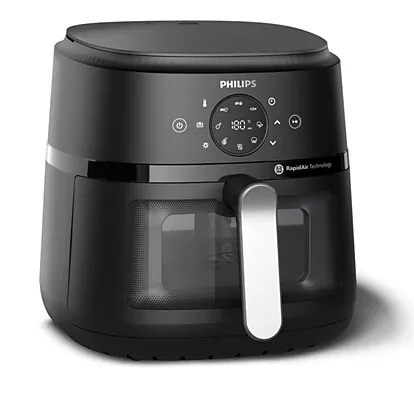
The Philips HD9200 manual includes frozen chicken nuggets as a specific food-table example. That example is not a wet-batter method or an instruction for every breaded product. Choose guidance that identifies your actual coating, food, and appliance arrangement before starting preparation.
A self-made crumb coating, a frozen coated item, and a prepared battered product can have different directions. Do not replace those directions with a generic chicken or fish preset. Ingredient state and product identity matter as much as the name on the control panel.
Read raw or cooked status separately from appearance
The Food Standards Agency warns that frozen breaded chicken products can require thorough cooking even when their coating appears browned. That is a reason to read the exact packet rather than deciding the filling is cooked from its colour.
Keep the preparation instructions with the food until it is ready to serve. Coated products need the cooking directions for their particular filling and preparation state. Use its supported method and the appropriate safety guidance for its filling, rather than judging only the crust.
Follow the coating sequence of one recipe
If a documented air-fryer recipe calls for a dry coating sequence, follow it as a complete method. Record whether it uses flour, egg, crumbs, a prepared coating, or something else. Do not combine incompatible steps from several recipes and assume the result is still the same method.
Check the plate, rack, dish, or other setup stated by the recipe and appliance. A liner or tray changes the arrangement and needs its own compatibility verification. Its presence in another cook's photo is not evidence that it belongs in your setup.
Plan handling without damaging the intended coating
Read whether the method asks you to turn, shake, or leave the food in position. Those actions are not interchangeable for every coating. Use the utensils and drawer handling permitted by the appliance instructions.
A useful cooking note records what happened to the coating and whether the filling met its completion requirements. If you alter the next attempt, change one preparation or arrangement detail within appropriate guidance. Do not use a crisp crust as a substitute for a food-safety check.
Example: identify the coating before shopping
If your dinner plan begins with the phrase crispy chicken, decide what preparation you mean before buying ingredients. A packaged breaded product, a recipe using a dry coating, and a freshly mixed liquid batter need their own directions. Choose the product or recipe first, then confirm that it supports the appliance and arrangement you intend to use. Keep the package until the meal is complete so you can check its instructions again. This small planning step prevents a photo of one preparation from becoming an assumed method for a very different coating.
Choose another method when support is missing
If you only have deep-frying instructions for a wet batter and no compatible air-fryer method, use a supported preparation route rather than guessing. The point of a comparison site is to make the decision clearer, not to insist that every coating belongs in every appliance.
- Identify crumb coating, prepared batter, or liquid batter.
- Read whether the filling is raw, part-cooked, or cooked.
- Use a recipe or packet method matching that starting state.
- Verify every plate, tray, liner, or dish in the proposed setup.
- Follow the specified turning or other handling sequence.
- Assess the filling separately from the crust appearance.
Behind this guide
Sources & editorial method
This guide combines original editorial decision support with the linked documentation. It is not a hands-on product test. Check the exact regional model and its manual before purchasing or using an appliance.
- Philips HD9200 user manual: model-specific food table ↗Checked
- UK FSA: cooking instructions and thorough preparation ↗Checked